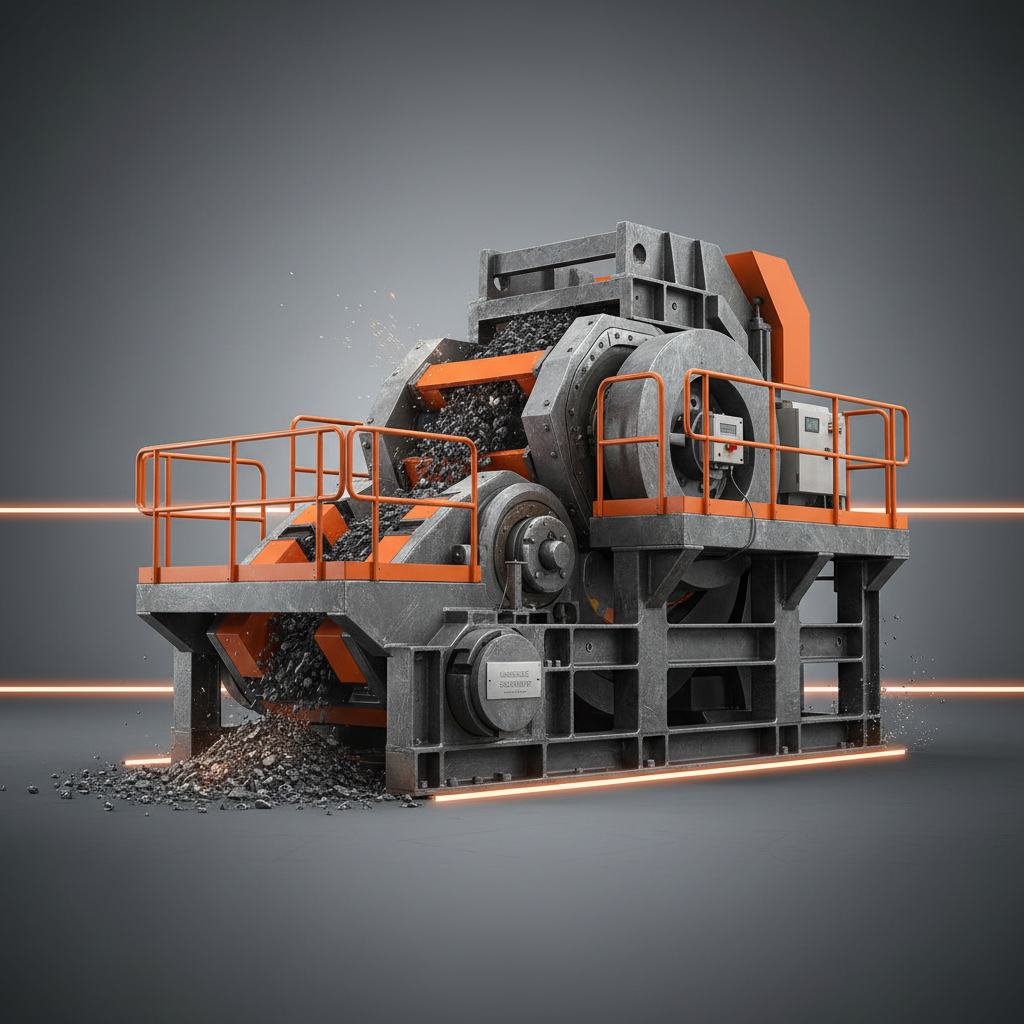
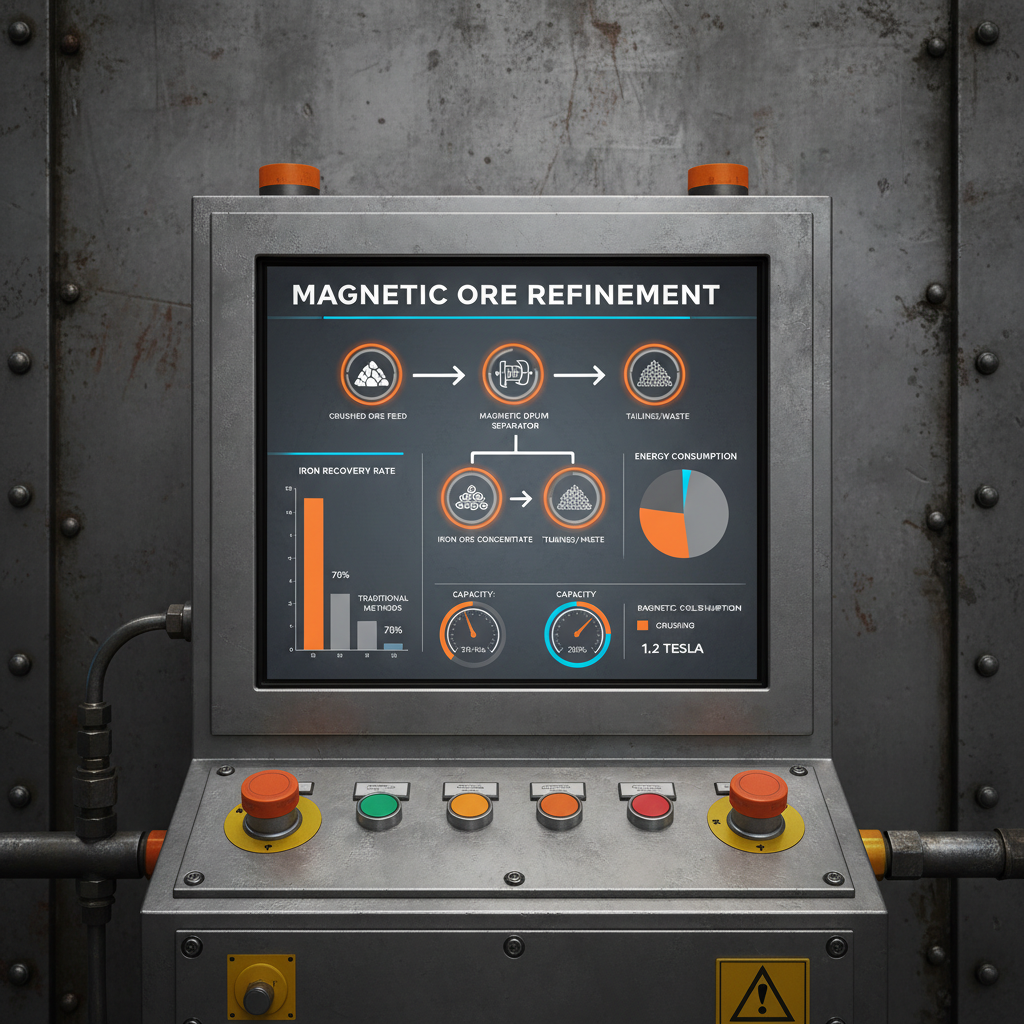
Magnetic separation of iron ore is a crucial process in the mining industry, enabling the efficient extraction of valuable iron minerals from raw ore. This technique leverages the differing magnetic properties of materials to separate ferrous (iron-containing) components from non-ferrous gangue. Its importance stems from iron being a fundamental component in steel production, a cornerstone of modern infrastructure and manufacturing. Understanding this process is key to optimizing resource utilization and reducing environmental impact within the mining sector.
Globally, the demand for iron ore continues to rise, driven by economic growth in developing nations and sustained construction activity worldwide. According to the World Steel Association, global crude steel production reached 1.831 billion tonnes in 2022. This escalating demand necessitates innovative and effective methods for ore processing, with magnetic separation playing a vital role in meeting these needs. The ability to efficiently and sustainably separate iron ore directly impacts the cost and availability of steel, influencing global economic trends.
The increasing stringency of environmental regulations also emphasizes the importance of optimizing mineral processing techniques. Traditional methods often result in substantial waste and environmental degradation. Therefore, improvements in magnetic separation, focusing on energy efficiency and waste reduction, are essential for responsible resource management and sustainable mining practices. This drive towards sustainability further solidifies the importance of understanding and refining the principles of magnetic separation of iron ore.
Introduction to Magnetic Separation of Iron Ore
Magnetic separation of iron ore is a cornerstone of modern mineral processing, enabling the concentration of valuable iron-bearing minerals from otherwise unusable ore. This technology has evolved significantly over the years, from simple hand-operated separators to sophisticated, high-intensity magnetic systems. Magnetic separation of iron ore is not merely a physical process, but a carefully engineered solution that directly impacts the economic viability of iron ore mining operations.
The process hinges on the principle that different minerals exhibit varying magnetic susceptibility. By applying a magnetic field, iron-containing minerals (such as magnetite and hematite) are attracted to the magnetic source, while non-magnetic minerals (gangue) are left behind. This differential attraction allows for a clean and efficient separation, resulting in a higher-grade iron ore concentrate suitable for steelmaking.
Defining Magnetic Separation of Iron Ore
Magnetic separation of iron ore is a process used to separate iron-bearing minerals from non-magnetic materials using magnetic forces. It's a physical separation technique, meaning it doesn't involve chemical reactions or alterations to the mineral composition. This makes it an environmentally friendly and cost-effective method for upgrading low-grade iron ores. The core principle is exploiting the magnetic properties inherent in certain iron minerals.
This technique directly supports modern industry by providing a consistent and reliable source of high-quality iron ore, essential for steel production. Steel, in turn, fuels construction, manufacturing, automotive industries, and numerous other sectors driving global economic growth. Without efficient iron ore processing, the availability and cost of steel would be significantly impacted, potentially hindering industrial progress.
The process has applications extending beyond just iron ore. It's also employed in recycling operations to recover ferrous metals from waste streams, contributing to a circular economy and reducing landfill waste. This versatility reinforces its importance in addressing both industrial needs and sustainability concerns.
Key Factors Influencing Efficiency
Several factors determine the effectiveness of magnetic separation of iron ore. The magnetic susceptibility of the ore minerals is paramount – the stronger the magnetic response, the easier the separation. Equally important is the magnetic field strength applied by the separator. Higher field strengths generally result in better separation, but also increase energy consumption.
The particle size distribution of the ore significantly influences separation efficiency. Fine particles are more susceptible to magnetic forces but can also experience greater drag from air or water, hindering their movement towards the magnetic source. Conversely, coarser particles may not respond effectively to the magnetic field. Feed rate is another crucial parameter – an optimal feed rate ensures sufficient contact time with the magnetic field without causing saturation or overloading the system.
Finally, the type of magnetic separator utilized plays a critical role. Low-intensity magnetic separators (LIMS) are suitable for strongly magnetic minerals like magnetite, while high-intensity magnetic separators (HIMS) are required for weakly magnetic minerals like hematite. Choosing the appropriate separator is crucial for achieving optimal performance and cost-effectiveness.
Global Applications and Industry Impact
Magnetic separation of iron ore is extensively used in major iron ore producing countries like Australia, Brazil, China, and Russia. In Australia, the Pilbara region relies heavily on magnetic separation to process vast quantities of hematite ore. Brazil’s Carajás mine similarly employs this technique to extract high-grade iron ore from complex ore bodies.
The impact extends beyond just large-scale mining operations. Smaller, regional mines also utilize magnetic separation to process lower-grade ores, making previously uneconomical deposits viable. This broad application contributes to a more diversified and resilient iron ore supply chain. Moreover, recycling plants utilize magnetic separation to recover ferrous materials from end-of-life products, contributing to resource conservation.
In remote industrial zones, where transportation costs are prohibitive, on-site magnetic separation significantly reduces the volume of material requiring transport, lowering overall production costs. Even in post-disaster relief operations, mobile magnetic separation units can be deployed to recover valuable metals from debris, assisting in cleanup efforts and resource recovery.
Magnetic Separation of Iron Ore Method Comparison
Advantages and Long-Term Value
The advantages of employing magnetic separation of iron ore are substantial. From a cost perspective, it’s a relatively inexpensive method compared to other mineral processing techniques like flotation. This translates to lower production costs and increased profitability for mining companies. Furthermore, advancements in technology have led to increased energy efficiency, reducing operational expenses and minimizing environmental impact.
Sustainability is a key long-term value. By allowing the processing of lower-grade ores, magnetic separation reduces the need to mine new, undisturbed areas. The recovery of ferrous metals from recycling streams further promotes resource conservation and reduces landfill waste. Socially, it contributes to job creation in mining and related industries, supporting local economies. The reliability of the process ensures a stable supply of iron ore, essential for global infrastructure development.
Future Trends and Innovation
The future of magnetic separation of iron ore is inextricably linked to advancements in materials science, automation, and digital technologies. Research into new magnetic materials with enhanced properties, such as increased remanence and coercivity, promises to improve separation efficiency and reduce energy consumption. The integration of artificial intelligence (AI) and machine learning (ML) algorithms can optimize process parameters in real-time, maximizing recovery rates and minimizing waste.
Automation, including the use of robotic systems for ore handling and separator control, will further enhance efficiency and reduce labor costs. Furthermore, the development of more compact and mobile magnetic separation units will enable on-site processing in remote locations, reducing transportation costs and environmental impact. Green energy integration, powering separators with renewable sources, will align with sustainability goals.
Challenges and Potential Solutions
Despite its advantages, magnetic separation of iron ore faces several challenges. The processing of finely disseminated ores, where iron minerals are intimately interlocked with gangue, can be difficult. Similarly, the presence of paramagnetic minerals, which exhibit weak magnetic susceptibility, can hinder effective separation. Another challenge is the scaling up of high-intensity magnetic separation techniques for large-scale operations.
Potential solutions include the development of advanced pre-concentration techniques to liberate iron minerals, the use of chemical pre-treatment to enhance magnetic susceptibility, and the implementation of multi-stage separation systems to improve recovery rates. Innovative separator designs, utilizing pulsed magnetic fields or hybrid separation methods (combining magnetic separation with other techniques like flotation), can address the challenges posed by complex ore types.
Furthermore, employing advanced modelling and simulation tools can optimize process parameters and predict performance under varying conditions, aiding in the design and operation of more efficient magnetic separation systems.
Summary of Challenges and Solutions in Magnetic Separation of Iron Ore
| Challenge |
Ore Type Affected |
Impact on Efficiency |
Potential Solution |
| Fine Dissemination |
Complex Hematite Ores |
Reduced Liberation, Lower Recovery |
Advanced Pre-Concentration |
| Weakly Magnetic Minerals |
Paramagnetic Iron Ores |
Difficult Separation |
High-Intensity Magnetic Separation |
| Scaling Up HIMS |
Large-Scale Operations |
Cost and Complexity |
Optimized Separator Design |
| Gangue Interference |
Ores with Similar Magnetism |
Reduced Purity of Concentrate |
Multi-Stage Separation |
| Energy Consumption |
All Ore Types |
Increased Operational Costs |
Renewable Energy Integration |
| Process Optimization |
All Ore Types |
Suboptimal Recovery Rates |
AI/ML-Driven Control Systems |
FAQS
Magnetic separation offers several key advantages, including its relatively low cost, environmental friendliness (no harsh chemicals involved), and high efficiency in separating strongly magnetic iron minerals. Unlike flotation, it avoids the use of potentially polluting reagents. It's also generally less energy intensive than processes like gravity separation for comparable recovery rates. This makes it a sustainable and economically viable choice for many iron ore operations.
Particle size is a crucial factor. Too large, and the magnetic force may be insufficient to overcome gravity or inertia. Too small, and particles can become entrained in the fluid medium, reducing their response to the magnetic field. Optimal particle size ranges depend on the separator type and ore characteristics. Pre-processing steps like crushing and grinding are often employed to achieve the ideal particle size distribution for efficient magnetic separation.
While effective on various iron ores, magnetic separation is particularly well-suited for processing ores rich in strongly magnetic minerals like magnetite (Fe3O4). However, it can also be applied to hematite (Fe2O3) ores using high-intensity magnetic separators. The suitability also depends on the degree of liberation – how well the iron minerals are separated from the gangue. Pre-processing to liberate the minerals improves separation efficiency.
Magnetic field strength is directly proportional to the force exerted on magnetic particles. Higher field strengths attract more iron minerals, leading to improved separation. However, increasing field strength also increases energy consumption. Selecting the appropriate field strength is a trade-off between recovery rate and operational cost. Different separators offer varying field strengths to suit different ore types and processing requirements.
Magnetic separation generally boasts lower maintenance costs compared to more complex techniques like flotation due to simpler mechanical components and the absence of chemical reagent handling. Operational costs are also comparatively lower, primarily related to energy consumption for the magnetic field and material handling. This makes it an attractive option for both large and small-scale mining operations focused on cost-effectiveness.
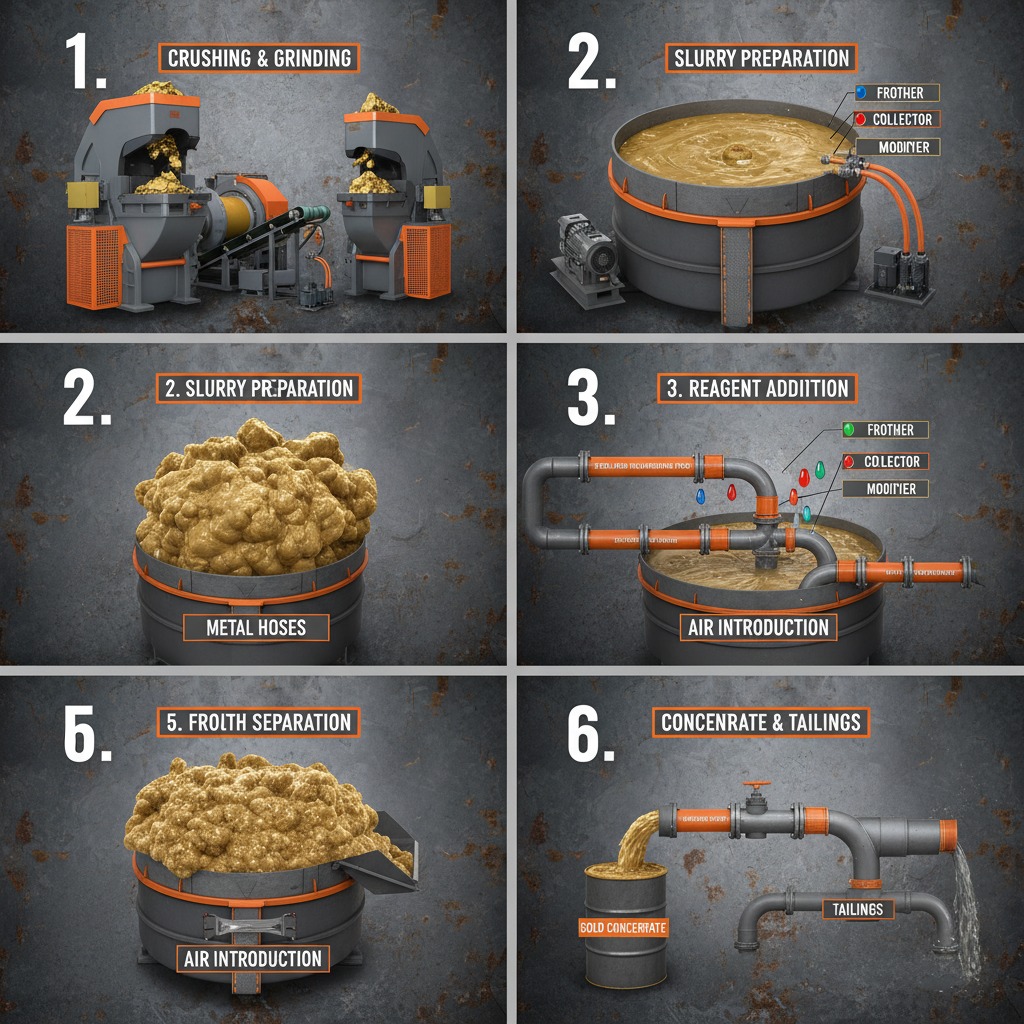
Absolutely. Combining magnetic separation with other techniques like crushing, grinding, screening, and even flotation is common practice. For example, pre-concentration using magnetic separation can reduce the load on a flotation circuit, improving overall efficiency and reducing reagent consumption. These hybrid approaches are often optimized to achieve maximum recovery rates and the desired concentrate grade.
Conclusion
In conclusion, magnetic separation of iron ore remains a vital and evolving technology in the mining industry. Its efficiency, cost-effectiveness, and environmental benefits make it an indispensable tool for extracting and upgrading iron ore resources globally. From its foundational principles to emerging innovations in materials science and automation, the field continues to adapt to the demands of a growing and increasingly sustainability-conscious world.
Looking ahead, continued investment in research and development, coupled with the integration of digital technologies, will unlock even greater potential for magnetic separation. Embracing these advancements will not only enhance productivity and reduce costs but also contribute to a more responsible and sustainable future for the iron ore industry. For more information and solutions, visit our website: www.qwmetal.com