Argentite froth flotation is a crucial process in the mining industry, specifically used to concentrate silver sulfide (argentite) ores. Its significance lies in enabling the efficient and economical extraction of silver, a valuable metal with applications ranging from electronics and medicine to investment. Understanding the principles of argentite froth flotation is vital for optimizing silver recovery rates and minimizing environmental impact, contributing to sustainable mining practices globally.
Globally, silver production is heavily reliant on effective beneficiation techniques, with froth flotation being the dominant method for argentite ores. The demand for silver continues to rise due to its increasing use in solar panels, electric vehicles, and other burgeoning technologies, making argentite froth flotation even more critical. Improvements in this process translate directly to greater silver availability, supporting various downstream industries and economic growth.
The application of argentite froth flotation addresses the challenge of processing low-grade ores, which are becoming increasingly common as high-grade deposits are depleted. By selectively separating argentite from unwanted gangue minerals, froth flotation allows for the economic viability of extracting silver from otherwise marginal resources, extending the lifespan of mining operations and securing silver supply chains.
Introduction to Argentite Froth Flotation
Argentite froth flotation is a physicochemical process used to separate argentite (Ag₂S), a primary ore of silver, from other minerals. It leverages differences in surface properties to selectively attach argentite particles to air bubbles, forming a froth that can be skimmed off, concentrating the valuable silver sulfide. This process is indispensable for modern silver mining, accounting for the vast majority of silver production worldwide.
The success of argentite froth flotation hinges on careful control of several parameters, including pH, reagent dosages, pulp density, and aeration rate. Optimizing these variables is essential to maximizing silver recovery while minimizing the contamination of the concentrate with unwanted gangue minerals. The economic viability of many silver mining operations directly depends on the efficiency of this process.
Defining Argentite Froth Flotation
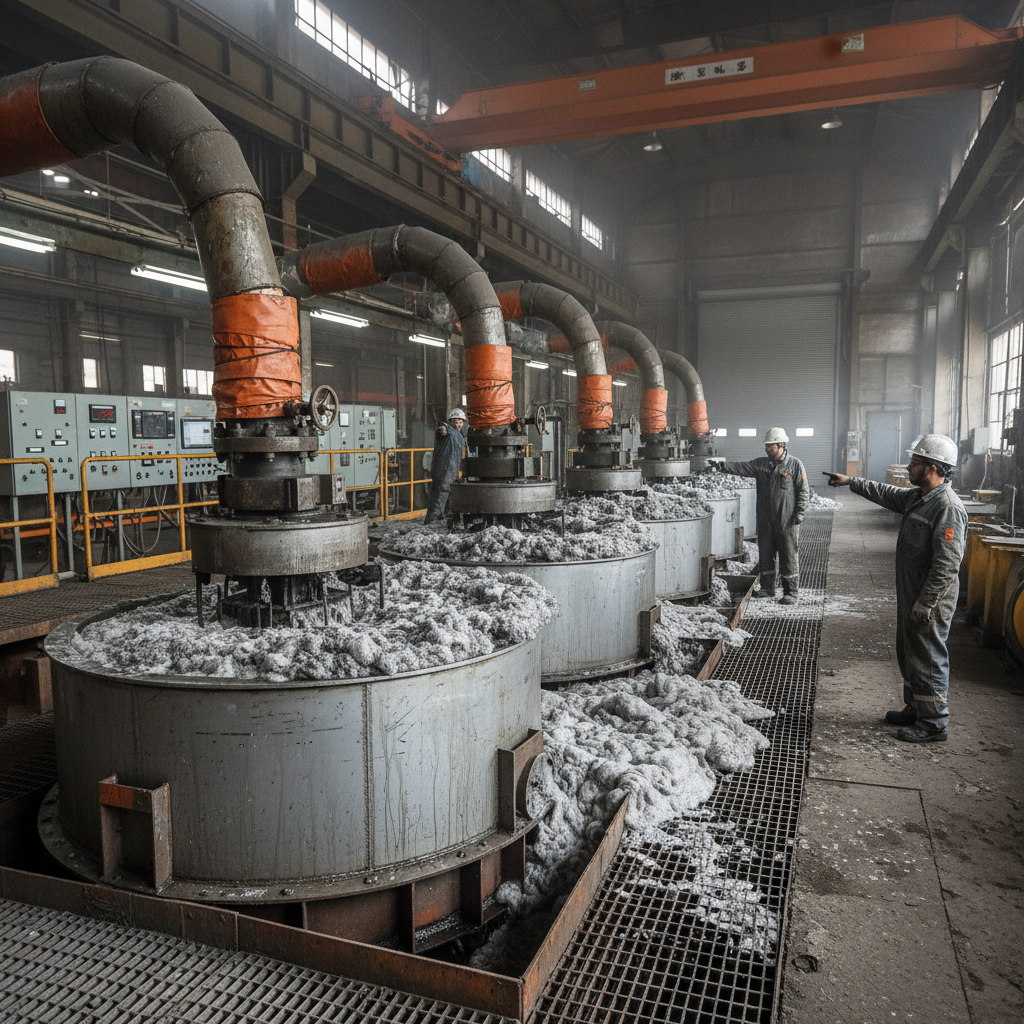
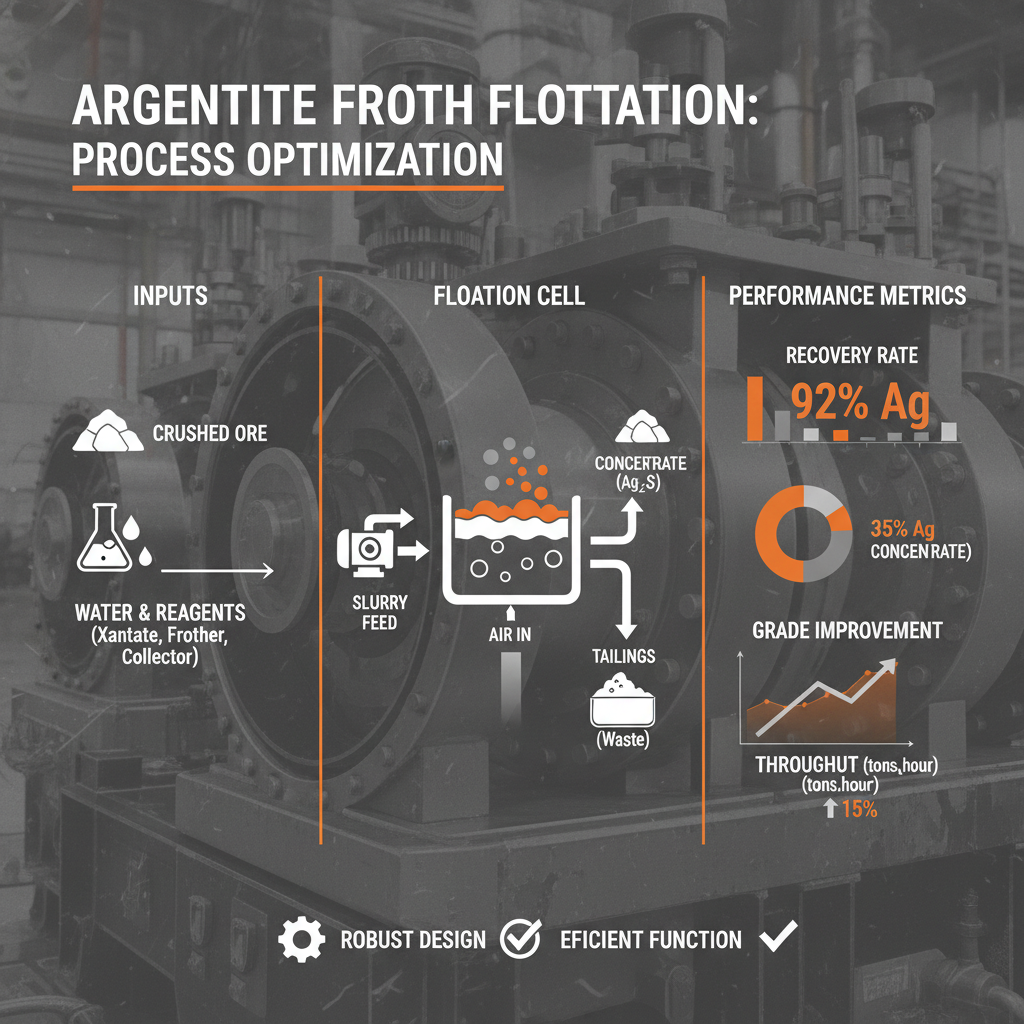
Argentite froth flotation is a separation technique where finely ground ore is mixed with water and specific chemical reagents, creating a slurry. These reagents, known as collectors, modify the surface of argentite particles, making them hydrophobic (water-repellent). Air is then bubbled through the slurry, and the hydrophobic argentite particles adhere to the air bubbles.
This bubble-particle aggregate rises to the surface, forming a froth layer. This froth, enriched in argentite, is then skimmed off, resulting in a concentrate. The remaining material, known as tailings, contains the unwanted minerals. The process is fundamentally a surface chemistry phenomenon, requiring a deep understanding of mineral properties and reagent interactions.
The technique is integral to modern mineral processing, enabling the extraction of silver from ores that would otherwise be uneconomical to process using traditional methods. It directly supports the supply of silver for a myriad of industrial applications, from electronics and solar energy to healthcare and jewelry. argentite froth flotation is a cornerstone of silver resource development.
Key Components of the Process
Several core components work in concert to achieve effective argentite froth flotation. First, the ore preparation stage involves crushing and grinding the ore to liberate the argentite particles from the surrounding gangue. The particle size distribution is critical, as too coarse particles won't float efficiently, while excessively fine particles can cause issues with froth stability.
Next, reagent conditioning is crucial. Collectors, such as xanthates, selectively adsorb onto the argentite surface, rendering it hydrophobic. Frothers, like pine oil, stabilize the air bubbles, creating a froth that is strong enough to carry the loaded particles. Modifiers, such as lime, control the pH of the slurry, influencing the effectiveness of the collectors and preventing the flotation of unwanted minerals.
The flotation cell itself is the heart of the process. These cells are typically agitated to maintain a homogenous slurry and promote bubble-particle contact. Air is introduced through spargers or mechanical agitators. The froth collection stage involves skimming off the froth layer, containing the concentrated argentite. Finally, the tailings disposal represents an important environmental consideration, requiring responsible management practices.
Operational Parameters and Their Impact
The efficiency of argentite froth flotation is heavily influenced by several operational parameters. pH control is paramount, as it affects the surface charge of both argentite and gangue minerals. Optimizing pH ensures selective adsorption of collectors onto the argentite surface. Collector dosage must be carefully controlled; insufficient dosage results in low recovery, while excessive dosage can lead to non-selective flotation.
Pulp density, the ratio of solids to liquids in the slurry, impacts bubble-particle collision frequency. Too high a density hinders bubble movement, while too low a density reduces collision probability. Aeration rate determines the size and distribution of air bubbles. Fine bubbles offer a larger surface area for particle attachment, but can be less stable.
Comparative Analysis of Argentite Froth Flotation Methods
Global Applications and Industrial Significance
Argentite froth flotation is employed in silver mining operations across the globe, particularly in countries like Mexico, Peru, Poland, and Australia, which are significant silver producers. These operations range from large-scale industrial mines to smaller artisanal operations. The process is often integrated with other metallurgical techniques, such as leaching and smelting, to produce high-purity silver.
The industrial significance of argentite froth flotation extends beyond primary silver mining. It is also utilized in the processing of complex polymetallic ores containing both silver and other valuable metals, such as lead and zinc. In remote industrial zones, this process enables resource extraction where logistical challenges otherwise preclude economic viability.
Advantages and Long-Term Value Proposition
Argentite froth flotation offers several key advantages, including its high silver recovery rates, relatively low operating costs, and scalability. It enables the economic processing of low-grade ores, extending the lifespan of silver mining operations and contributing to a more sustainable supply. The process also benefits from a relatively simple operational framework.
The long-term value proposition is substantial. By enabling efficient silver extraction, argentite froth flotation supports a wide range of industries reliant on this crucial metal. Furthermore, ongoing research and development are focused on minimizing the environmental impact of the process, enhancing its sustainability and ensuring its continued relevance in the future.
Future Trends and Technological Innovations
Future trends in argentite froth flotation are centered around optimizing the process for greater efficiency, sustainability, and automation. Research is underway to develop more selective collectors that minimize reagent consumption and reduce environmental impact. The integration of advanced process control systems, utilizing real-time data analysis and machine learning, promises to optimize operational parameters and maximize silver recovery.
Digitalization, including the use of sensors and data analytics, will play an increasingly important role in monitoring and controlling the flotation process. Furthermore, the exploration of alternative frothing agents and the development of environmentally friendly reagents are key areas of innovation. These advancements will solidify the role of argentite froth flotation in a more sustainable and technologically advanced mining industry.
Future Trends and Technological Innovations
Future trends in argentite froth flotation are centered around optimizing the process for greater efficiency, sustainability, and automation. Research is underway to develop more selective collectors that minimize reagent consumption and reduce environmental impact. The integration of advanced process control systems, utilizing real-time data analysis and machine learning, promises to optimize operational parameters and maximize silver recovery.
Digitalization, including the use of sensors and data analytics, will play an increasingly important role in monitoring and controlling the flotation process. Furthermore, the exploration of alternative frothing agents and the development of environmentally friendly reagents are key areas of innovation. These advancements will solidify the role of argentite froth flotation in a more sustainable and technologically advanced mining industry.
Summary of Challenges and Solutions in Argentite Froth Flotation
| Challenge |
Impact on Efficiency |
Proposed Solution |
Implementation Cost (Scale 1-10) |
| Non-Selective Flotation |
Reduced silver grade in concentrate |
Optimized collector chemistry & pH control |
4 |
| Froth Instability |
Silver losses in tailings |
Improved frother selection & dosage |
3 |
| Fine Particle Entrainment |
Contamination of concentrate with gangue |
Enhanced classification & flocculation |
6 |
| Reagent Consumption |
High operating costs |
Recycling and optimized dosage control |
5 |
| Environmental Impact |
Water pollution & tailings disposal issues |
Sustainable reagent choices & tailings management |
7 |
| Lack of Real-time Monitoring |
Suboptimal process control |
Implementation of sensor technology & automation |
8 |
FAQS
The most commonly used reagents include collectors like xanthates (e.g., potassium amyl xanthate) to render argentite hydrophobic, frothers such as pine oil to stabilize air bubbles and create a durable froth, and modifiers like lime (calcium hydroxide) to adjust pH and enhance selectivity. Careful control of reagent dosages is crucial for optimal performance and minimizing unwanted side effects.
Particle size is a critical factor. Too coarse particles may not float effectively due to insufficient surface area for collector adsorption. Excessively fine particles can lead to issues like slime coating and reduced froth stability. An optimal particle size distribution, typically achieved through grinding and classification, is essential for maximizing silver recovery.
pH significantly impacts the surface charge of both argentite and gangue minerals. Adjusting pH allows for selective adsorption of collectors onto argentite, while suppressing the flotation of unwanted minerals. The optimal pH range depends on the specific ore composition and reagent scheme, but is typically controlled using lime or sulfuric acid.
Froth stability is crucial for transporting argentite particles to the surface. It can be improved by optimizing frother dosage and type, controlling air flow rate, minimizing the presence of interfering ions, and ensuring a consistent pulp density. The froth characteristics can be visually monitored to assess and adjust the process parameters.
Environmental concerns include the use of potentially toxic reagents and the generation of tailings. Sustainable practices, such as reagent recycling, efficient water management, and responsible tailings disposal, are essential to minimize the environmental footprint. Research into environmentally friendly reagents is ongoing to further reduce the impact.
Performance is monitored through a variety of parameters, including silver grade and recovery in the concentrate, reagent consumption, pulp density, pH, and froth characteristics. Online analyzers and sampling systems provide real-time data for process control. Regular metallurgical accounting and analysis of tailings are also crucial for optimizing performance.
Conclusion
Argentite froth flotation remains the dominant and most efficient method for extracting silver from its primary sulfide ore. Its ability to process low-grade resources, coupled with ongoing advancements in reagent technology and process control, ensures its continued importance in meeting global silver demand. The implementation of sustainable practices is paramount, focusing on minimizing environmental impact and maximizing resource utilization.
Looking ahead, further innovation in areas like automation, digital process control, and the development of eco-friendly reagents will enhance the efficiency and sustainability of argentite froth flotation. Understanding these advancements is crucial for operators seeking to optimize their operations and contribute to a more responsible and resilient silver supply chain. To learn more about optimizing your argentite froth flotation process, visit our website: www.qwmetal.com.