search
The global demand for high-performance chemical transport is driving a significant shift toward advanced fluoropolymer linings. In industrial settings where aggressive media and extreme corrosive environments are the norm, finding a reliable ptfe lined pipe factory becomes a critical strategic decision for plant engineers and procurement specialists.
The primary challenge lies in the failure of standard metallic piping when exposed to high-concentration acids or alkalis, leading to catastrophic leaks and unplanned downtime. While various linings exist, Polytetrafluoroethylene (PTFE) is distinguished by its near-universal chemical inertness and thermal stability, yet the quality of the bonding process between the liner and the steel substrate often dictates the actual service life of the component.
This technical analysis examines the engineering requirements for corrosion-resistant piping, the critical evaluation criteria for selecting a manufacturing partner, and how composite lining technologies—including the specialized rubber lining solutions found at https://www.qwpipeline.com/rubber-lined-elbows.html—address the most vulnerable points in industrial fluid transport.


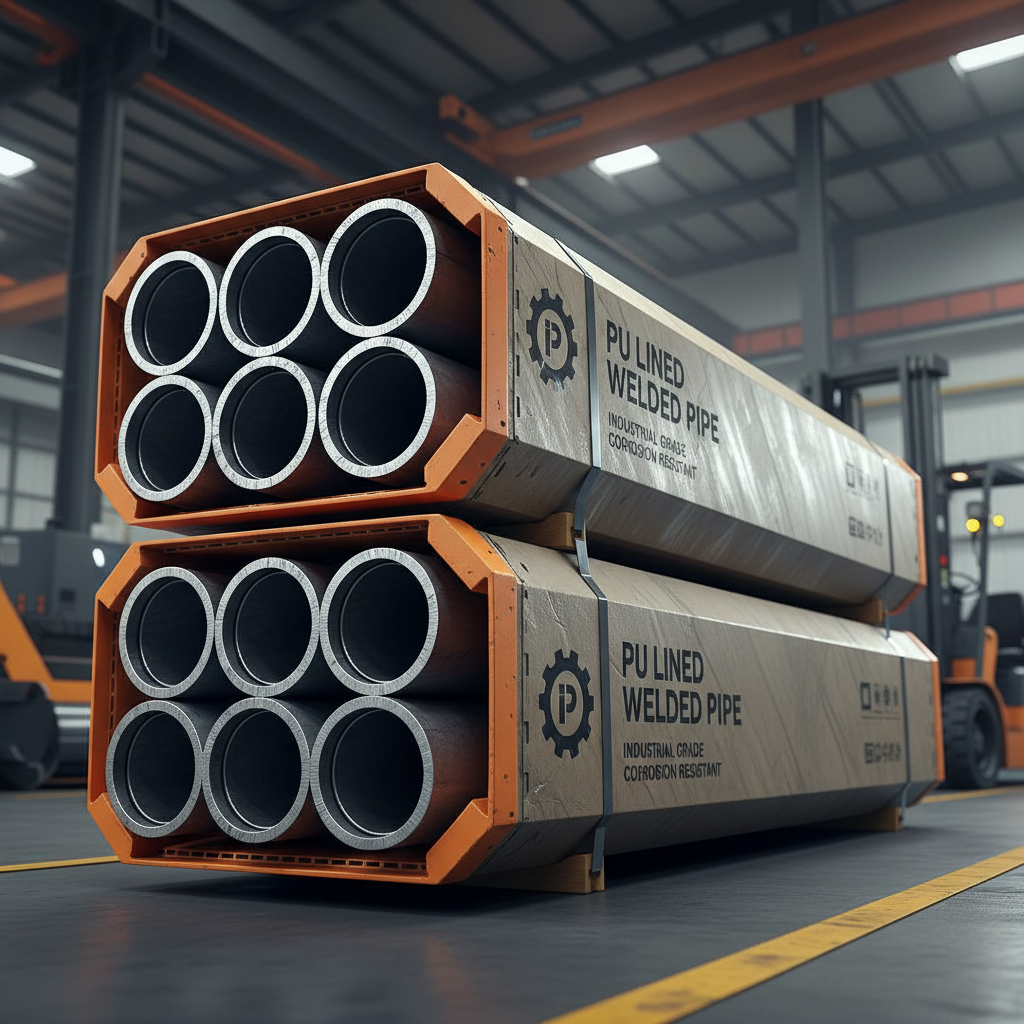
Composite piping operates on a "hard-shell, soft-core" architectural principle. The outer shell, typically constructed from carbon steel (such as Q235B or ASTM A106), provides the necessary structural integrity to withstand internal working pressures and external mechanical loads.
The inner lining—whether it be PTFE, HDPE, or high-grade rubber—serves as the chemical barrier. In a professional ptfe lined pipe factory, the precision of the liner's wall thickness is paramount to ensure uniform flow dynamics and prevent premature wear in high-velocity zones.
The selection of a lined pipe is governed by three primary engineering variables: chemical compatibility, temperature range, and operational pressure. For instance, while PTFE offers superior chemical resistance, its thermal expansion coefficient differs significantly from that of the steel outer shell, which can lead to liner collapse under vacuum conditions if not properly engineered.
Pressure ratings (such as PN10, PN16, or PN25) are determined by the thickness of the steel substrate. However, the actual limiting factor is often the lining's ability to remain bonded during pressure surges. High-performance factories utilize advanced vulcanization or sintering processes to mitigate these risks.
Diameter ranges from DN25 to DN2000 allow for scalability across different industrial scales. Engineering teams must prioritize the radius of elbows (15° to 90°) to minimize turbulent flow, as turbulence increases the rate of abrasive wear on the lining material, regardless of the chemical inertness of the polymer.
The most common failure mode in lined piping is delamination, where the internal liner separates from the steel wall. This creates a void where corrosive media can accumulate, leading to rapid "hidden" corrosion of the steel shell that is undetectable through visual external inspection.
Ensuring the integrity of the bond requires rigorous quality control, including spark testing and vacuum leak detection. Without these steps, the perceived advantage of the lining material is nullified by the structural failure of the composite interface.
Different lining materials are optimized for specific industrial stressors. While a ptfe lined pipe factory focuses on chemical purity and temperature, other materials like polyurethane or rubber are selected for their superior ability to absorb kinetic energy from abrasive particles.
The following assessment provides a normalized engineering rating based on common industrial performance metrics, highlighting the trade-offs between chemical resistance and abrasion resilience.
In the mining and mineral processing sector, tailings discharge lines represent one of the most aggressive environments. The combination of abrasive ore slurries and acidic additives necessitates a lining that can withstand both mechanical erosion and chemical attack. This is where rubber-lined elbows provide a critical advantage due to their elasticity.
Conversely, in chemical processing plants transporting phosphoric or hydrochloric acid, the inert nature of PTFE is non-negotiable. In these scenarios, the piping system must be integrated with compatible gaskets and valves to ensure that no "weak points" exist where the corrosive medium can bypass the lining.
The industry is moving toward "smart linings" integrated with fiber-optic sensors capable of detecting liner thinning or delamination in real-time. This transition from scheduled maintenance to condition-based maintenance will drastically reduce the risk of sudden pipeline failure in hazardous chemical zones.
Another emerging trend is the development of multi-layer composite linings. By combining the chemical resistance of PTFE with the abrasion resistance of a polyurethane outer layer, manufacturers can create a single component capable of handling complex fluids that are both corrosive and abrasive.
Sustainability is also influencing material science, with an increasing focus on reducing the carbon footprint of the sintering process used in PTFE production and improving the recyclability of the steel-polymer composite at the end of its lifecycle.
When evaluating a ptfe lined pipe factory, buyers should look beyond the material datasheet. The true value lies in the manufacturer's ability to provide customized solutions based on the specific fluid velocity and temperature profiles of the application.
A professional partner should offer a full technical consultation, including design optimization for bends to reduce turbulence and a comprehensive quality assurance report for every batch.
The following matrix provides a framework for comparing different lining configurations based on their operational profiles rather than specific brand models.
| Configuration Profile | Primary Resistance | Operational Factor | Recommended Use Case |
|---|---|---|---|
| Standard PTFE | High Chemical | Low Abrasion | Acid Transport |
| High-Duty Rubber | Extreme Abrasion | Moderate Chemical | Mining Tailings |
| Polyurethane Composite | Wear & Impact | Low Temp | Slurry Handling |
| HDPE Industrial | General Corrosion | Cost-Efficiency | Water Management |
| Ceramic Reinforced | Max Abrasion | Brittle/High Temp | Abrasive Waste |
| Custom Fluoropolymer | Universal Inertness | Precision Temp | Specialty Pharma |
PTFE provides near-absolute chemical inertness, making it durable against aggressive acids and solvents where rubber would degrade. However, rubber is far more durable in terms of mechanical abrasion. If your application involves high-velocity slurries with solid particles, rubber lining is superior as it absorbs the kinetic energy of the particles. For pure chemical transport, PTFE is the standard.
Bonding quality should be verified through non-destructive testing (NDT). High-voltage spark testing is used to detect pinholes or voids in the liner. Additionally, vacuum leak testing ensures that the bond can withstand negative pressure without delaminating. Always request a quality certificate that specifies the testing method used by the factory.
The pressure capacity is determined by the steel outer shell, not the PTFE liner. While the steel can handle very high pressures (PN16, PN25, and beyond), the liner must be engineered to avoid collapse during pressure fluctuations. Proper thickness and bonding are essential to ensure the liner does not buckle under extreme pressure changes.
The primary causes are turbulent flow and improper installation. In elbows, the fluid velocity increases at the outer curve, leading to localized erosion. If the lining is too thin or the bend radius is too sharp, the material wears through quickly. Additionally, misalignment during installation can create stress points that lead to premature cracking of the liner.
Temperature determines the thermal stability of the polymer. PTFE can operate at significantly higher temperatures than most rubbers or HDPE. However, at very low temperatures, some rubbers become brittle and lose their impact resistance. Engineers must match the lining's operating temperature range with the actual process fluid temperature to prevent thermal degradation.
For high-concentration phosphoric acid, PTFE is generally the best choice due to its universal chemical resistance. However, depending on the temperature and the presence of abrasive impurities, certain synthetic rubbers like EPDM or specialized fluoropolymers may be used. A technical consultation with a manufacturer is recommended to evaluate the specific acid concentration and flow rate.
The transition toward composite piping solutions proves that the synergy between structural steel and advanced polymers is the only viable path for modern corrosive fluid transport. The critical finding is that the lining material itself is only half of the equation; the bonding technology and the precision of the manufacturing process are what ultimately determine the system's ROI.
For organizations managing high-risk chemical lines, the practical implication is clear: prioritize manufacturers who provide comprehensive NDT testing and custom engineering for high-wear areas. Whether selecting a ptfe lined pipe factory or investing in rubber-lined elbows, focusing on the "vulnerable points" of the network—the bends and joints—is the most effective way to ensure long-term operational safety and efficiency.