Copper ore processing is a cornerstone of modern industry, transforming raw geological materials into the essential building block for countless technologies and infrastructure projects globally. From electrical wiring and plumbing to renewable energy systems and advanced electronics, the demand for copper continues to grow, making efficient and sustainable ore processing paramount. Understanding the intricacies of this process is crucial for engineers, environmental scientists, investors, and policymakers alike, ensuring responsible resource management and mitigating environmental impacts.
The global copper market is substantial, with major production occurring in countries like Chile, Peru, China, and the Democratic Republic of Congo. According to the U.S. Geological Survey, global mine production of copper in 2022 was approximately 21 million metric tons. This significant production underlines the vital role copper plays in global economies. However, the industry faces challenges including declining ore grades, increasing energy consumption, and the need for environmentally sound extraction and refining techniques. copper ore processing innovations are addressing these concerns.
The effective processing of copper ore isn’t just an industrial concern; it directly impacts societal progress. Access to affordable and reliable electricity, enabled by copper, is fundamental to improving living standards, powering education, and fostering economic development, especially in emerging economies. Furthermore, copper’s critical role in renewable energy technologies—like solar panels and wind turbines—makes its efficient production essential for a sustainable future.
Introduction to Copper Ore Processing
The journey from raw copper ore to usable metal is a complex and multifaceted process. It typically begins with mining, extracting the ore from the earth, followed by a series of concentration, extraction, and refining stages. These stages aim to separate the valuable copper minerals from waste materials (gangue) and ultimately produce high-purity copper suitable for various applications. copper ore processing methods constantly evolve, driven by technological advancements and environmental concerns.
Different types of copper ore – such as sulfides, oxides, and carbonates – require different processing techniques. Sulfide ores, the most common type, often undergo froth flotation to concentrate the copper minerals before leaching and electrowinning. Oxide ores, on the other hand, are frequently treated using hydrometallurgical methods, such as heap leaching or solvent extraction. The selection of the optimal processing route depends on factors like ore composition, economic considerations, and environmental regulations.
The Global Significance of Copper Ore Processing
Copper is an indispensable material in the modern world, and its demand is directly linked to global economic growth. The construction industry, a major consumer of copper, benefits from its excellent conductivity, corrosion resistance, and ductility. The electrical and electronics sectors rely on copper for wiring, circuit boards, and a multitude of components. Furthermore, the burgeoning renewable energy sector—particularly in the production of solar panels, wind turbines, and energy storage systems—is heavily dependent on a steady supply of refined copper.
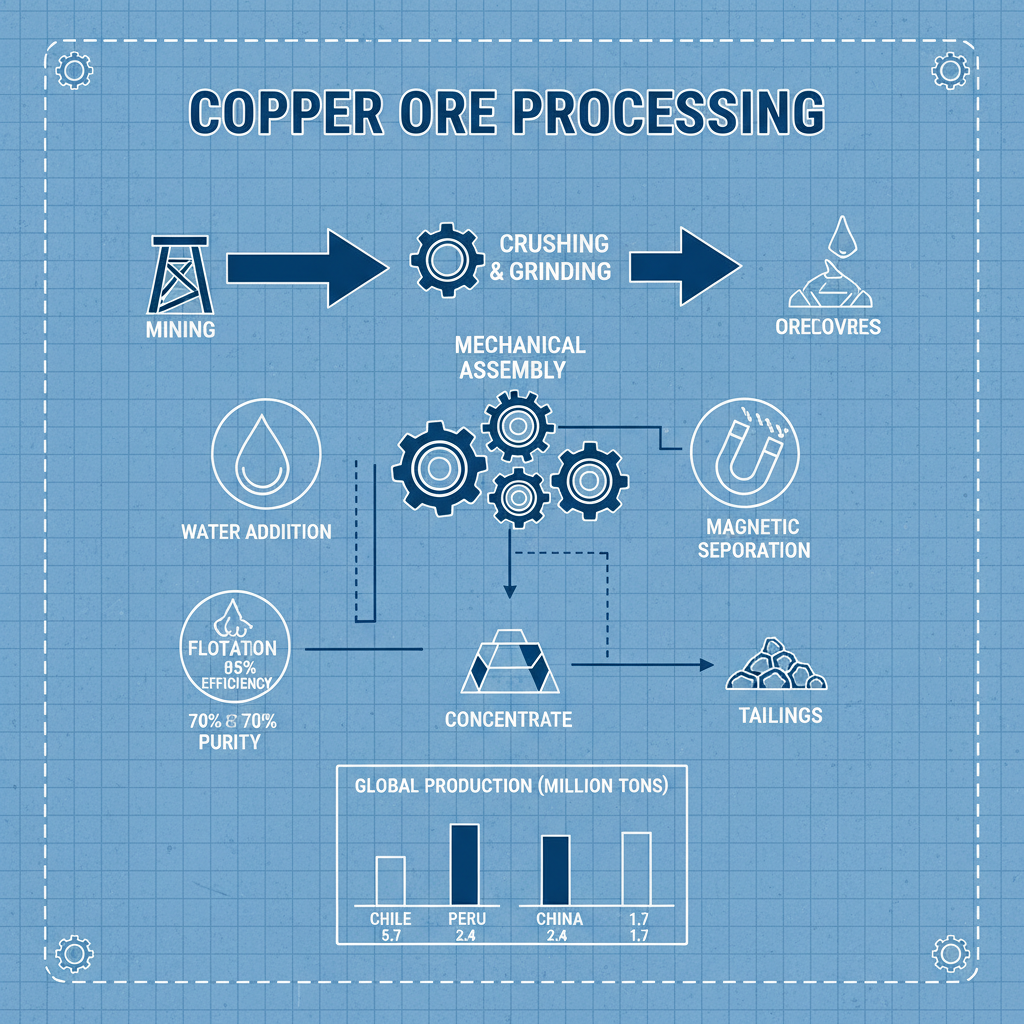
The geographical distribution of copper ore deposits is uneven, leading to international trade and complex supply chains. Chile is currently the world’s largest copper producer, accounting for roughly 27% of global production, followed by Peru, China, and the Democratic Republic of Congo. Political stability, infrastructure development, and responsible mining practices are critical factors influencing the reliable supply of copper to global markets. Disruptions in any of these areas can have significant economic consequences.
Sustainability is increasingly central to the discussion around copper ore processing. Traditional methods can be energy-intensive and generate substantial waste. Therefore, the industry is actively investing in technologies to reduce its environmental footprint, including improving energy efficiency, minimizing water usage, and promoting responsible waste management. This shift towards sustainable practices is essential for ensuring the long-term viability of the copper industry.
Defining Copper Ore Processing
Copper ore processing refers to the sequence of operations used to extract copper from its naturally occurring ores. This is not a single step but a series of physical and chemical transformations designed to separate the copper-bearing minerals from the surrounding waste rock. The specific processes employed depend heavily on the type of ore, its concentration of copper, and economic feasibility.
At its core, copper ore processing aims to increase the concentration of copper, making it economically viable to recover the metal. This often involves crushing and grinding the ore to liberate the copper minerals, followed by concentration techniques like froth flotation or gravity separation. Subsequent stages focus on extracting the copper from the concentrated minerals, typically through leaching or smelting, and finally refining it to achieve the desired purity.
The importance of copper ore processing extends far beyond simply providing a raw material for industry. It is intrinsically linked to advancements in materials science, chemical engineering, and environmental technology. Ongoing research and development in this field are continually pushing the boundaries of efficiency, sustainability, and responsible resource management, vital to meeting the global demands for this essential metal.
Key Components of Efficient Copper Ore Processing
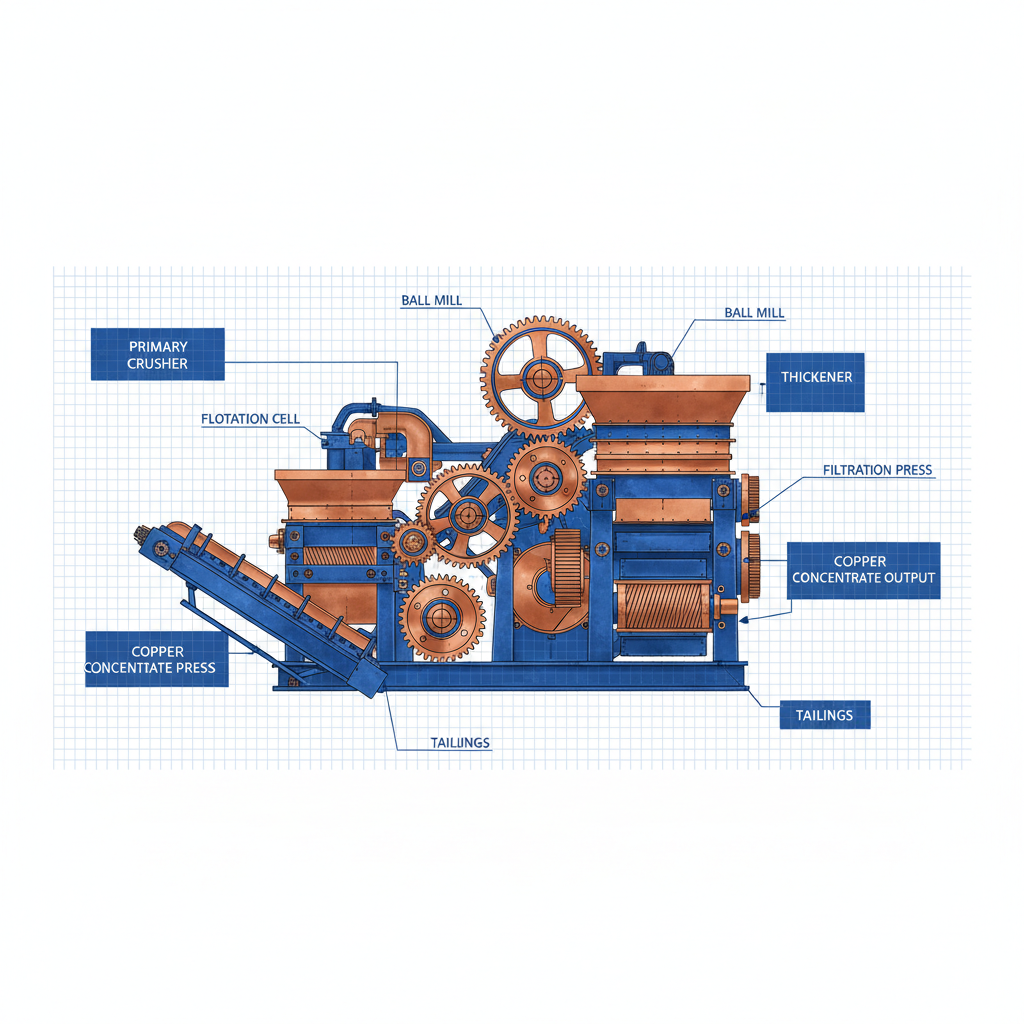
Efficient copper ore processing relies on several key components working in synergy. Firstly, Ore Characterization is crucial. Understanding the mineralogy, grade, and physical properties of the ore informs the selection of the most appropriate processing route. Secondly, Crushing and Grinding liberate the copper minerals from the surrounding rock, preparing them for subsequent concentration steps.
Thirdly, Concentration Techniques such as froth flotation separate the valuable copper minerals from the waste material. Finally, Extraction and Refining processes, including leaching, solvent extraction, and electrowinning, recover the copper from the concentrate and purify it to the desired level. Each of these stages is critical for maximizing copper recovery and minimizing environmental impact.
Copper Ore Processing Method Efficiency
Global Applications of Copper Ore Processing
The applications of copper, derived from efficient ore processing, are pervasive across numerous sectors. In the construction industry, copper is essential for electrical wiring, plumbing, and roofing, prized for its durability and conductivity. The automotive industry utilizes copper extensively in wiring harnesses, motors, and radiators, contributing to vehicle performance and efficiency.
Renewable energy technologies, such as solar photovoltaic (PV) systems and wind turbines, heavily rely on copper for conducting electricity and ensuring reliable power generation. Moreover, copper plays a crucial role in the production of electric vehicles (EVs), with EVs requiring significantly more copper than internal combustion engine vehicles. In post-disaster relief operations, portable generators and electrical equipment relying on copper provide essential power for communication and medical facilities.
Advantages and Long-Term Value
Investing in advanced copper ore processing technologies yields significant tangible benefits. Cost optimization through increased recovery rates and reduced energy consumption directly impacts profitability. Sustainability improvements, such as minimizing water usage and waste generation, enhance environmental stewardship and reduce operational risks. Furthermore, reliable copper supply chains contribute to economic stability and support the growth of downstream industries.
Beyond the economic and environmental advantages, copper ore processing provides long-term value by fostering innovation and enhancing societal well-being. The development of more efficient and environmentally friendly processing techniques drives technological advancements, creating new job opportunities and improving resource utilization. Access to reliable and affordable copper, enabled by these advancements, contributes to improved living standards and supports sustainable development worldwide.
Future Trends and Innovations in Copper Ore Processing
The future of copper ore processing is characterized by a drive towards greater sustainability, efficiency, and automation. Digitalization, including the implementation of advanced sensors, data analytics, and artificial intelligence, is revolutionizing process control and optimization. Biomining, utilizing microorganisms to extract copper from low-grade ores, presents a promising alternative to traditional methods with reduced environmental impact.
The industry is also exploring innovative extraction techniques, such as supercritical fluid leaching and ionic liquid extraction, offering the potential for higher recovery rates and reduced chemical consumption. Moreover, the increasing focus on circular economy principles is driving research into copper recycling and the recovery of copper from electronic waste, minimizing the need for primary ore extraction.
Furthermore, advancements in materials science are leading to the development of more durable and efficient processing equipment, reducing maintenance costs and extending operational lifespan. These trends collectively point towards a more sustainable and technologically advanced future for copper ore processing, ensuring a reliable supply of this essential metal for generations to come.
Challenges and Solutions in Copper Ore Processing
Despite ongoing advancements, copper ore processing faces several challenges. Declining ore grades necessitate processing larger volumes of ore to obtain the same amount of copper, increasing energy consumption and waste generation. Complex ore mineralogy, containing interlocked minerals and impurities, requires more sophisticated and costly separation techniques. Environmental regulations, becoming increasingly stringent, demand responsible waste management and minimized pollution.
Solutions to these challenges include investing in advanced comminution technologies to improve ore liberation, developing more selective flotation reagents to enhance copper recovery, and implementing closed-loop water management systems to minimize water consumption and discharge. Furthermore, adopting innovative leaching techniques and optimizing process parameters through data analytics can significantly improve efficiency and reduce environmental impact. copper ore processing companies are spearheading these efforts.
Addressing these challenges requires a collaborative approach involving researchers, industry stakeholders, and policymakers. Sharing best practices, fostering innovation, and promoting responsible mining practices are essential for ensuring the long-term sustainability of the copper industry and maximizing its contribution to a more prosperous and environmentally sound future.
Summary of Challenges and Proposed Solutions in Copper Ore Processing
| Challenge |
Impact |
Proposed Solution |
Implementation Cost (1-10) |
| Declining Ore Grades |
Increased processing volume, higher energy consumption |
Advanced comminution, optimized flotation |
7 |
| Complex Ore Mineralogy |
Reduced recovery rates, higher reagent costs |
Selective flotation reagents, advanced sorting technologies |
8 |
| Water Scarcity |
Restricted processing capacity, environmental concerns |
Closed-loop water systems, water recycling |
6 |
| Waste Management |
Environmental pollution, disposal costs |
Tailings reprocessing, dry stacking of tailings |
9 |
| Energy Consumption |
High operational costs, carbon footprint |
Energy-efficient equipment, renewable energy integration |
7 |
| Stringent Regulations |
Increased compliance costs, operational restrictions |
Proactive environmental management, advanced monitoring systems |
5 |
FAQS
Copper ore processing can lead to significant environmental impacts, including water pollution from acid mine drainage, air emissions from smelting, and the generation of large volumes of tailings waste. These tailings can contain harmful heavy metals and pose risks to surrounding ecosystems and human health. Mitigation strategies involve implementing closed-loop water systems, utilizing advanced air pollution control technologies, and adopting responsible tailings management practices.
The grade of copper ore – the percentage of copper present – directly influences processing costs. Lower-grade ores require processing significantly larger volumes of material to obtain the same amount of copper, leading to higher energy consumption, increased reagent usage, and greater waste generation. This necessitates more complex and expensive processing techniques, ultimately increasing the overall cost per unit of copper produced.
Froth flotation is a crucial concentration technique widely used in copper ore processing, especially for sulfide ores. It involves creating a slurry of finely ground ore and adding chemical reagents that selectively attach to copper minerals, making them hydrophobic. Air is then bubbled through the slurry, and the hydrophobic copper minerals attach to the air bubbles, forming a froth that is skimmed off, effectively separating the copper minerals from the waste material.
Several emerging technologies are advancing copper hydrometallurgy. These include biomining, utilizing microorganisms to leach copper from ores; solvent extraction using more selective and environmentally friendly solvents; and electrowinning with improved electrode materials and cell designs. Ionic liquids and supercritical fluid leaching are also being investigated as potential alternatives to conventional leaching methods.
The rapidly increasing global demand for electric vehicles (EVs) is significantly impacting copper ore processing. EVs require substantially more copper than traditional internal combustion engine vehicles, due to their electric motors, wiring harnesses, and battery systems. This surge in demand is putting pressure on copper supply chains and driving investment in new copper mining and processing capacity.
Tailings management is paramount in responsible copper mining. Tailings, the waste material remaining after ore processing, can contain harmful substances and pose environmental risks if not properly managed. Implementing safe and sustainable tailings storage facilities, utilizing dry stacking techniques to reduce water consumption, and exploring options for tailings reprocessing and valorization are essential for minimizing environmental impacts and ensuring long-term stability.
Conclusion
In conclusion, copper ore processing is a complex and vital industry that underpins modern society. From its critical role in electrical infrastructure and renewable energy to its contribution to economic development, copper remains an indispensable material. Understanding the intricacies of ore processing—from initial extraction to refining—is crucial for ensuring sustainable resource management and mitigating environmental impacts. Embracing innovation and adopting responsible practices are essential for meeting the growing global demand for this vital metal.
Looking ahead, continued investment in research and development, coupled with a commitment to circular economy principles, will be pivotal. The industry must prioritize energy efficiency, water conservation, and responsible waste management to minimize its environmental footprint and ensure long-term sustainability. By embracing these challenges and opportunities, we can unlock the full potential of copper ore processing and contribute to a more prosperous and sustainable future. For more information and innovative solutions in copper ore processing, visit our website: www.qwmetal.com