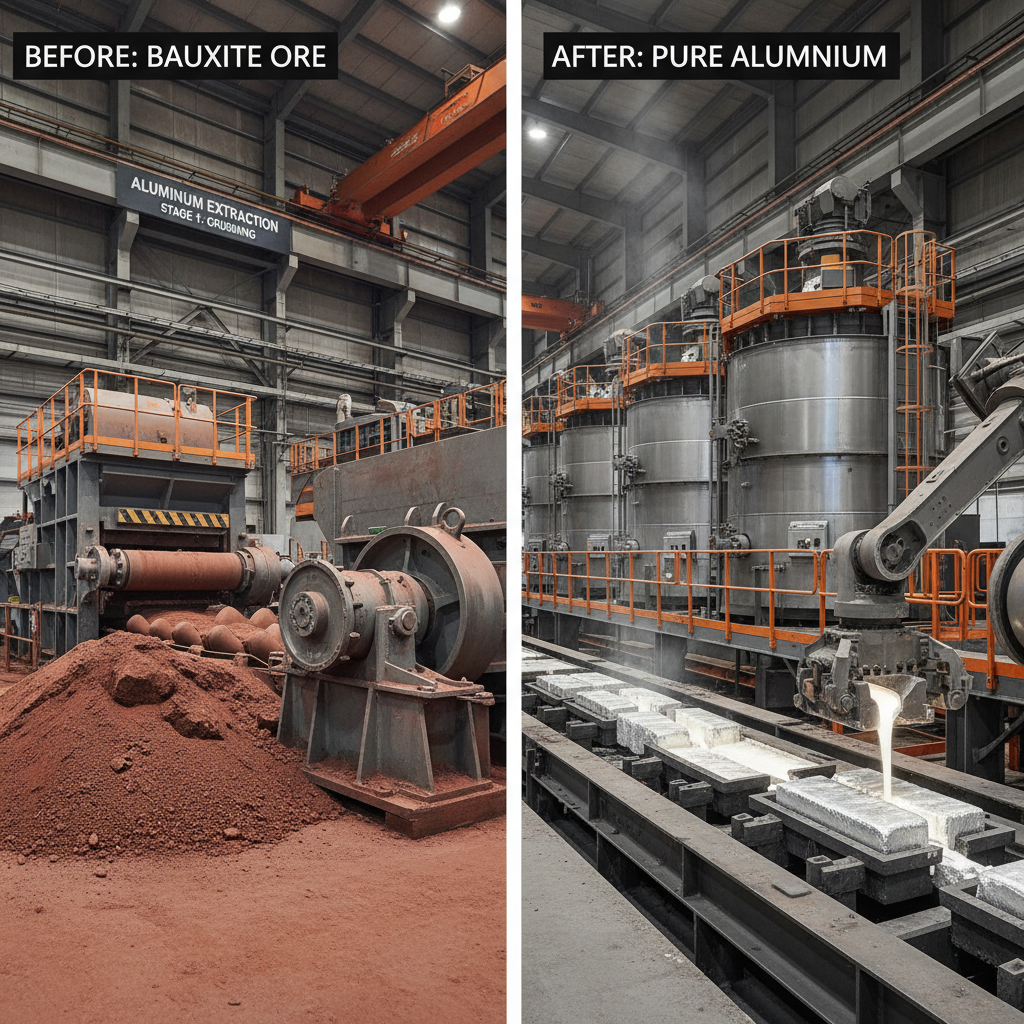
Aluminum extraction from bauxite is the cornerstone of modern aluminum production, a globally significant process powering industries from aerospace to packaging. The increasing demand for this lightweight and versatile metal necessitates efficient and sustainable extraction methods. Understanding this process is crucial for engineers, policymakers, and anyone interested in the future of materials science and manufacturing.
The global aluminum market is valued at hundreds of billions of dollars, with a substantial portion reliant on bauxite ore – the primary source of aluminum. Countries like Australia, Guinea, and China dominate bauxite mining and aluminum production. The increasing need to balance economic growth with environmental responsibility poses a significant challenge, driving innovation in extraction technologies and waste management.
Aluminum extraction from bauxite isn’t simply about obtaining a metal; it’s about enabling progress. From the construction of lightweight vehicles that improve fuel efficiency to the development of durable medical equipment, aluminum’s unique properties contribute to improved quality of life and technological advancement. The demand for aluminum continues to rise, making efficient and responsible extraction paramount.
The Bayer Process and Aluminum Extraction
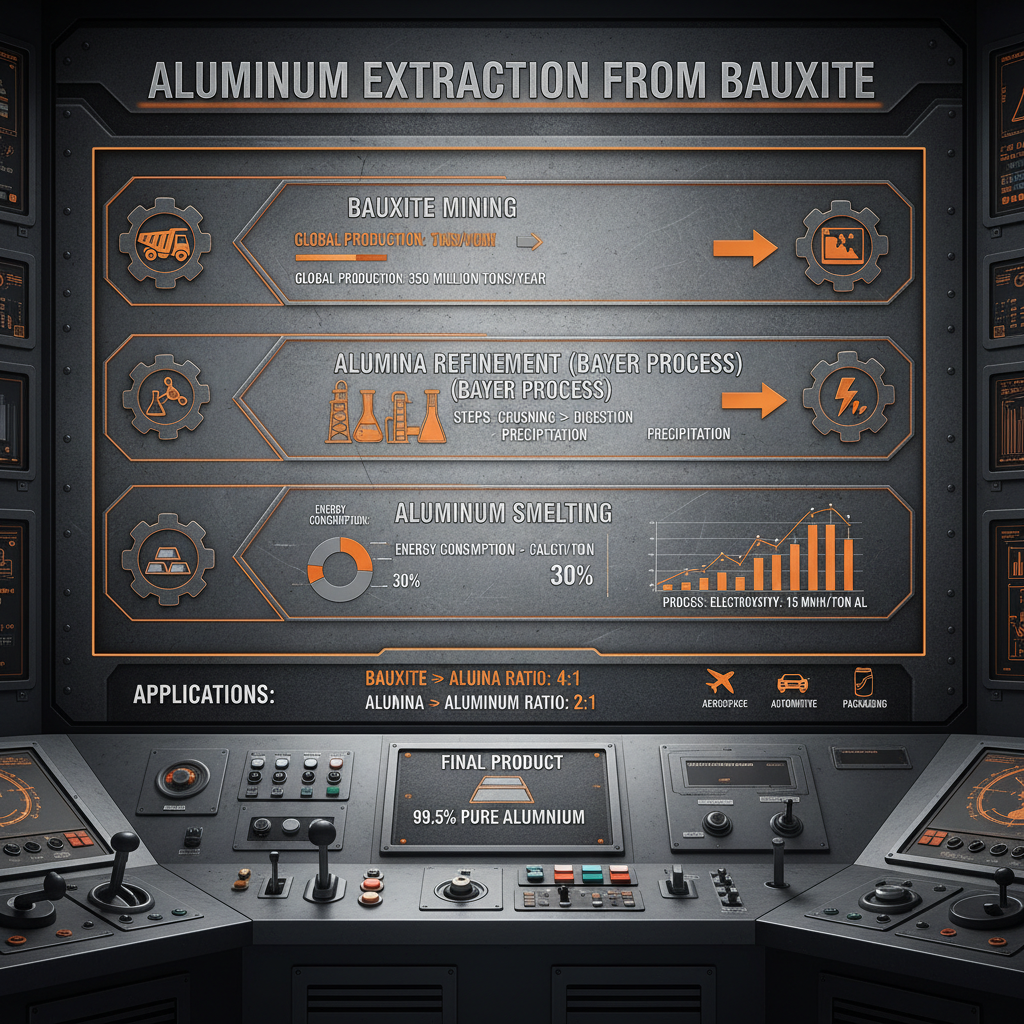
The Bayer process is the predominant method for aluminum extraction from bauxite. This process involves dissolving the aluminum-bearing minerals in bauxite (primarily gibbsite, boehmite, and diaspore) in hot sodium hydroxide solution. The resulting solution, called sodium aluminate, is then purified to remove impurities like iron oxides and silica.
Following purification, the sodium aluminate solution undergoes precipitation. Cooling the solution and seeding it with aluminum hydroxide crystals encourages the precipitation of aluminum hydroxide. This aluminum hydroxide is then calcined (heated to high temperatures) to yield alumina (aluminum oxide), the intermediate product used in the Hall-Héroult process to produce metallic aluminum. The efficiency of the Bayer process directly influences the cost and sustainability of aluminum production.
Global Bauxite Reserves and Production
Bauxite reserves are not uniformly distributed around the globe. Australia currently holds the largest proven bauxite reserves, accounting for approximately 39% of the world’s total. Guinea possesses the second-largest reserves (around 24%), followed by Vietnam (12%), Brazil (9%), and Jamaica (7%). These regions are critical to the global aluminum supply chain.
The top producing countries mirror the reserve distribution, with Australia consistently leading in bauxite mining. Guinea’s production is rapidly increasing, spurred by significant investments in mining infrastructure. China is also a major bauxite producer, although heavily reliant on imports to meet its substantial aluminum demand. Understanding these geographical concentrations is vital for assessing supply chain vulnerabilities.
The distribution of bauxite resources influences international trade, geopolitical dynamics, and the economic development of producing nations. Fluctuations in bauxite supply, driven by factors like mining regulations, infrastructure limitations, and political instability, can significantly impact the global aluminum market and the industries that rely on this critical metal.
Key Chemical Reactions in Aluminum Extraction from Bauxite
The core of aluminum extraction from bauxite rests upon a series of well-defined chemical reactions. The initial dissolution of aluminum hydroxide (gibbsite – Al(OH)₃) in sodium hydroxide (NaOH) is represented by the equation: Al(OH)₃(s) + NaOH(aq) → NaAl(OH)₄(aq). This creates sodium aluminate, the soluble aluminum complex.
The subsequent precipitation of aluminum hydroxide involves the reversal of this reaction under controlled cooling and seeding conditions: NaAl(OH)₄(aq) → Al(OH)₃(s) + NaOH(aq). Impurities like iron oxides are removed through precipitation as red mud – a complex waste product. Finally, calcination converts the aluminum hydroxide to alumina: 2Al(OH)₃(s) → Al₂O₃(s) + 3H₂O(g).
These reactions are carefully optimized to maximize aluminum recovery and minimize waste generation. Understanding these chemical processes is essential for improving the efficiency and environmental sustainability of the Bayer process and for exploring alternative extraction techniques.
Efficiency of Different Aluminum Extraction Methods from Bauxite
While the Bayer process remains dominant, alternative methods for aluminum extraction from bauxite are being investigated to address limitations related to high-silica bauxite ores and environmental concerns. Acid leaching techniques, utilizing sulfuric or hydrochloric acid, show promise for processing bauxite types unsuitable for the Bayer process.
Direct dissolution methods, involving the use of organic solvents or ionic liquids, are also under development. These approaches aim to bypass the traditional Bayer process steps and offer potential advantages in terms of energy consumption and waste reduction. However, they currently face challenges related to cost, solvent recovery, and scalability.
Comparative Efficiency of Aluminum Extraction Methods
Environmental Impact of Aluminum Extraction from Bauxite
The environmental impact of aluminum extraction from bauxite is a significant concern. The generation of red mud, a highly alkaline waste product containing iron oxides and other impurities, poses a major disposal challenge. Improperly managed red mud can contaminate soil and water sources, causing long-term ecological damage.
Energy consumption is another key environmental factor. The Bayer process and subsequent Hall-Héroult process are energy-intensive, often relying on fossil fuels. Greenhouse gas emissions associated with electricity generation contribute to climate change. Sustainable practices, such as utilizing renewable energy sources and implementing efficient waste management strategies, are crucial for mitigating these impacts.
Economic Considerations in Aluminum Extraction from Bauxite
The economic viability of aluminum extraction from bauxite is influenced by numerous factors, including bauxite ore quality, energy costs, transportation expenses, and labor rates. High-grade bauxite ores with low silica content are more economically attractive, as they require less processing.
Energy costs are a substantial component of production expenses. Access to affordable and reliable energy sources is essential for maintaining competitiveness. Fluctuations in aluminum prices on the global market can also significantly impact profitability. Long-term investments in infrastructure and technological innovation are necessary for securing the economic sustainability of the aluminum industry.
Furthermore, the regulatory environment and the cost of environmental compliance play a critical role. Stringent environmental regulations may increase operating costs but also incentivize the adoption of more sustainable practices.
Innovations and Future Trends in Aluminum Extraction from Bauxite
Research and development efforts are focused on improving the efficiency and sustainability of aluminum extraction from bauxite. New technologies for red mud valorization – converting the waste product into valuable materials – are being actively explored. This includes using red mud in construction materials, as a soil amendment, or as a source of rare earth elements.
The integration of artificial intelligence and machine learning is optimizing process control, reducing energy consumption, and improving product quality. Furthermore, the development of bioleaching techniques, utilizing microorganisms to extract aluminum, offers a potentially environmentally friendly alternative to conventional methods.
Summary of Innovations in Aluminum Extraction from Bauxite
| Innovation Area |
Technology Description |
Potential Impact |
Development Stage |
| Red Mud Valorization |
Converting red mud into usable materials (e.g., construction materials, soil amendments) |
Reduced waste disposal, resource recovery, environmental remediation |
Pilot Scale |
| AI-Powered Process Control |
Using AI algorithms to optimize process parameters for efficiency and quality |
Reduced energy consumption, improved product yield, lower operating costs |
Implementation Phase |
| Bioleaching |
Employing microorganisms to dissolve aluminum from bauxite ore |
Environmentally friendly extraction, reduced chemical usage |
Research & Development |
| Advanced Acid Leaching |
Optimizing acid leaching processes for high-silica bauxite ores |
Expanded resource availability, reduced reliance on Bayer process |
Demonstration Plant |
| Direct Solvent Extraction |
Dissolving aluminum directly in organic solvents or ionic liquids |
Potentially lower energy consumption, reduced waste generation |
Laboratory Scale |
| Renewable Energy Integration |
Powering aluminum extraction plants with renewable energy sources (solar, wind, hydro) |
Reduced carbon footprint, sustainable production |
Increasing Adoption |
FAQS
Bauxite mining primarily impacts the environment through deforestation, habitat destruction, and water contamination. The generation of red mud, a highly alkaline waste product, poses a significant disposal challenge. Dust emissions during mining operations can also affect air quality. Effective environmental management plans, including land rehabilitation and water treatment, are crucial to mitigate these impacts.
The quality of bauxite ore, specifically its aluminum content and the level of impurities (primarily silica), significantly influences the efficiency and cost of aluminum extraction. High-grade bauxite with low silica content requires less processing and yields a higher aluminum recovery rate. Lower-grade ores necessitate more complex and energy-intensive treatment methods.
Red mud is a byproduct of the Bayer process, consisting of iron oxides, silica, and other impurities. It’s highly alkaline and poses significant disposal challenges due to its volume, chemical composition, and potential for environmental contamination. Finding safe and sustainable solutions for red mud management, such as valorization or secure storage, is a major focus of research.
Aluminum extraction, especially the Bayer and Hall-Héroult processes, is highly energy-intensive. Energy costs constitute a substantial portion of the overall production expenses. Access to affordable and reliable energy sources, including renewable energy, is crucial for maintaining the economic competitiveness of aluminum production.
Bioleaching, using microorganisms to dissolve aluminum from bauxite, offers a potentially environmentally friendly alternative to traditional methods. It could reduce the use of harsh chemicals, lower energy consumption, and potentially process lower-grade ores. However, bioleaching is still in the research and development phase and faces challenges related to scalability and efficiency.
Future trends include red mud valorization, the integration of AI and machine learning for process optimization, the development of more sustainable leaching techniques (including bioleaching), and the increased use of renewable energy sources. These innovations aim to reduce environmental impacts, improve efficiency, and ensure the long-term sustainability of the aluminum industry.
Conclusion
Understanding aluminum extraction from bauxite is paramount in navigating the complexities of the modern materials landscape. From the fundamental principles of the Bayer process to the emerging innovations in red mud valorization and bioleaching, a comprehensive grasp of this process is essential for engineers, environmental scientists, and policymakers alike. Efficient and sustainable aluminum production is critical for meeting global demand while minimizing environmental impact.
Looking ahead, continued investment in research and development, coupled with a commitment to responsible mining practices and circular economy principles, will be crucial. Embracing technological advancements and prioritizing environmental stewardship will ensure that aluminum continues to play a vital role in building a sustainable future. Visit our website at www.qwmetal.com to learn more about our commitment to innovative and sustainable aluminum solutions.