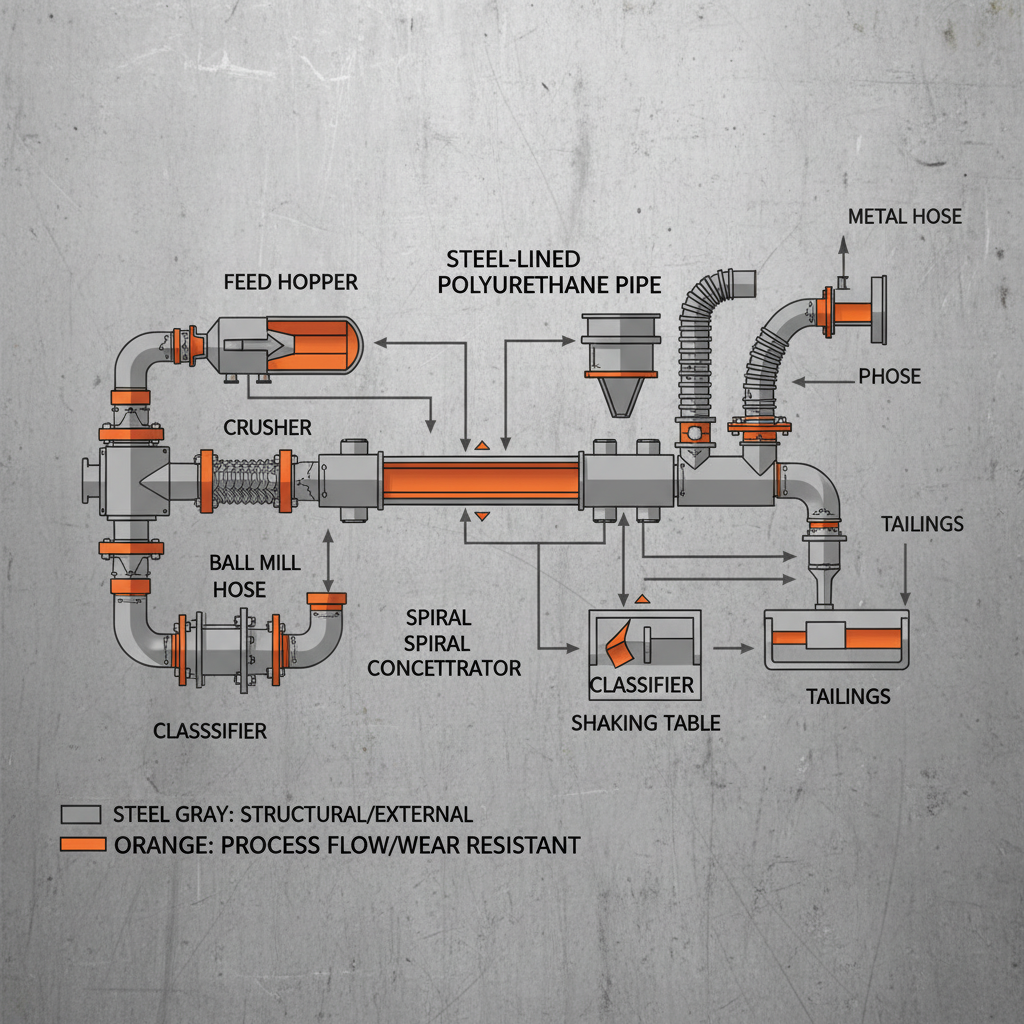
Determining the correct custom pu lined pipe pressure rating is a critical engineering decision that directly affects the safety and longevity of industrial slurry and chemical transport systems. When dealing with highly abrasive materials, the synergy between the outer steel shell's structural strength and the internal polyurethane lining's resilience defines the operational limit of the pipeline.
Unlike standard piping, polyurethane lined pipes are composite structures. The pressure rating is not merely a function of the material's tensile strength but is heavily influenced by the bonding quality between the PU layer and the metal substrate, the wall thickness of the steel, and the specific grade of polyurethane used for the lining.
For procurement managers and site engineers, understanding how to specify and verify these ratings is essential to prevent catastrophic failures in mining, oil and gas, or chemical processing environments where high-pressure abrasive flows are common.

The Engineering Logic Behind PU Lined Pipe Pressure Limits

At its core, a polyurethane lined pipe operates as a dual-layered system where the steel exterior provides the necessary hoop strength to withstand internal pressure, while the polyurethane interior protects the steel from corrosion and abrasion. The pressure rating is primarily dictated by the steel wall thickness and grade, but the PU lining introduces variables such as thermal expansion and permeability that must be accounted for in the final rating.
When a custom rating is requested, engineers must evaluate the "burst pressure" versus the "working pressure." The working pressure is typically a fraction of the burst pressure, incorporating a safety factor (often 2:1 or 4:1) to account for pressure surges, material fatigue, and environmental degradation over time.
Failure to accurately calculate the pressure rating can lead to lining collapse or, more severely, the rupture of the steel casing. Therefore, the integration process—how the PU is cast or extruded into the steel pipe—is just as important as the raw materials themselves to ensure no air pockets exist that could compromise the structure under high pressure.
Key Determinants of Custom Pressure Rating Performance
Several technical variables influence the final pressure rating of a customized PU lined system. The most significant is the thickness of the carbon steel or stainless steel outer shell. However, the polyurethane's hardness (measured in Shore A or D) also plays a role in how the lining distributes the pressure and resists the "plucking" effect of high-velocity particles.
Temperature is another critical factor. Polyurethane is a thermoplastic/thermoset material that softens as temperature increases. A pipe rated for 20 bar at 20°C may only be safe for 12 bar at 60°C. Custom specifications must therefore include the maximum operating temperature to ensure the lining does not deform or delaminate under pressure.
Finally, the bonding method—whether it is a chemical bond achieved through primers or a mechanical interference fit—determines the pipe's ability to handle vacuum conditions or rapid pressure cycling, which can otherwise cause the liner to collapse inward or blister.
Critical Industrial Applications and Pressure Demands
In the mining and quarrying sector, PU lined pipes are indispensable for transporting tailings and ore slurries. These applications often require a moderate pressure rating but extreme abrasion resistance. The challenge here is maintaining a consistent pressure rating as the lining gradually wears down, although the steel shell remains the primary pressure barrier.
Chemical processing plants often utilize these pipes for transporting corrosive acids or alkaline solutions. In these scenarios, the custom pressure rating must be paired with high chemical compatibility. The lining acts as a primary seal, and the pressure rating ensures that any minor permeability of the PU does not lead to rapid external corrosion of the steel shell.
Water management and dredging operations also rely on these systems. In deep-sea dredging, the pipes must withstand not only the internal pumping pressure but also the external hydrostatic pressure of the ocean, necessitating a specialized custom wall thickness for the steel casing to prevent buckling.
Analyzing Pressure Retention and Wear Resistance Metrics
When evaluating the performance of a custom PU lined pipe, it is essential to look at the trade-off between pressure capacity and wear life. Higher pressure ratings usually require thicker steel walls, which increases the overall weight and cost of the installation but does not necessarily increase the wear life of the internal lining.
The following data represents a relative comparison of how customized PU lining improves system longevity and pressure stability compared to traditional rubber-lined or uncoated steel options in abrasive environments.
custom pu lined pipe pressure rating Performance Metrics
As illustrated, while the base structural pressure is provided by the steel, the addition of a high-performance PU lining significantly extends the "Effective Service Life" and "Abrasion Resistance" metrics, ensuring that the pressure rating remains viable for thousands of hours longer than uncoated alternatives.
Best Practices for Specifying Custom Pressure Requirements
To ensure the procurement of a pipeline that meets actual field conditions, the specification process must move beyond simply stating a maximum pressure. Engineers should provide a full operational profile, including the frequency of pressure spikes (water hammer), the exact composition of the transported slurry, and the ambient temperature range.
It is also recommended to specify the lining thickness independently of the pressure rating. While the steel handles the pressure, the PU thickness determines the "wear allowance." In high-velocity applications, a thicker PU lining is required to ensure the pipe does not reach its critical pressure limit prematurely due to internal thinning.
Verification via hydrostatic testing is the gold standard for confirming the pressure rating. Every custom segment should be tested to 1.5 times its rated working pressure to ensure the integrity of the bond and the absence of leaks in the steel shell before the system is commissioned.
Future Trends in High-Pressure Polyurethane Composite Piping
The industry is seeing a shift toward "Smart Piping" where sensors are embedded within the PU lining or the steel wall to monitor real-time pressure and wear. This allow operators to predict when a pipe is approaching its safety limit, moving from scheduled maintenance to condition-based maintenance.
Material science is also evolving, with the introduction of nano-ceramic additives into the polyurethane matrix. These composites could potentially allow for thinner linings that offer higher abrasion resistance, thereby increasing the internal diameter for a given outer pressure rating and improving flow efficiency.
Furthermore, there is a growing trend toward sustainable manufacturing in the production of these pipes. This includes the use of recyclable polyurethane elastomers and low-carbon steel, ensuring that the infrastructure of tomorrow meets both the high-pressure demands of industry and the environmental mandates of global regulations.
Comparative Selection Guide for Lined Piping Solutions
Choosing the right lining material depends on the intersection of required pressure, abrasive intensity, and chemical exposure. While PU is superior for abrasion, other materials like HDPE or PTFE may be preferable for different pressure-temperature combinations.
The following table provides a decision-making framework for comparing Polyurethane (PU) with other common lining materials based on operational dimensions.
| Lining Material | Primary Strength | Pressure Limit Factor | Typical Application |
|---|---|---|---|
| Polyurethane (PU) | Extreme Abrasion Resistance | Steel Shell Thickness | Mining Slurry / Tailings |
| HDPE | Chemical Inertness | Thermal Expansion | Water / Low-Pressure Waste |
| Ceramic Lined | Max Hardness | Brittleness / Bonding | High-Temp Abrasives |
| PTFE | Universal Chemical Resistance | Cold Flow / Creep | Aggressive Chemical Acids |
| Rubber Lined | Impact Absorption | Permeability / Heat | General Purpose Slurry |
| Steel (Uncoated) | Pure Structural Strength | Wall Thickness | Non-Abrasive High Pressure |
Ultimately, the decision should be based on a total cost of ownership analysis. While ceramic lining may offer higher hardness, the custom PU lined pipe often provides the best balance of pressure reliability, installation flexibility, and wear life for most industrial slurry applications.
Frequently Asked Questions
Conclusion
Selecting a custom pu lined pipe pressure rating requires a holistic approach that considers the mechanical strength of the steel, the chemical properties of the polyurethane, and the environmental stressors of the application. By focusing on the synergy between these materials, operators can significantly reduce downtime and prevent hazardous failures.
For those seeking tailored engineering solutions for abrasive and corrosive transport, reviewing the specific product capabilities and technical support available through www.qwpipeline.com can provide the necessary guidance to optimize system performance and safety.