Aluminium extracted from bauxite is a cornerstone of modern industry, playing a vital role in sectors ranging from aerospace and automotive to packaging and construction. The global demand for this versatile metal continues to rise, driven by its unique combination of lightweight properties, corrosion resistance, and high strength. Understanding the processes involved in extracting aluminium from bauxite, its applications, and future trends is crucial for professionals, policymakers, and anyone interested in sustainable materials and industrial development.
The significance of aluminium extracted from bauxite extends beyond its technical properties. The bauxite mining and alumina refining industries have significant socio-economic impacts on producing regions, creating jobs and contributing to economic growth. However, these processes also present environmental challenges that require careful management and innovative solutions. A comprehensive understanding of the entire value chain is necessary for responsible and sustainable aluminium production.
The increasing focus on sustainability is driving innovation in aluminium extraction and production. From reducing energy consumption in the smelting process to developing closed-loop recycling systems, the industry is striving to minimize its environmental footprint. Aluminium extracted from bauxite is uniquely positioned to contribute to a circular economy, offering a sustainable material solution for a wide range of applications.
The Global Significance of aluminium extracted from bauxite
Aluminium extracted from bauxite is a globally traded commodity, with production concentrated in countries like Australia, China, and Brazil. According to the United Nations Statistics Division, global aluminium production reached over 68 million metric tons in 2022. This underscores the metal’s essential role in supporting economic activities worldwide. The demand is particularly strong in emerging economies undergoing rapid infrastructure development.
However, the industry faces growing scrutiny regarding its environmental and social impacts. Bauxite mining can lead to deforestation and habitat loss, while alumina refining generates significant waste products. The challenge lies in balancing the demand for aluminium extracted from bauxite with the need for sustainable and responsible production practices. Innovation in extraction techniques, waste management, and recycling are crucial for mitigating these challenges.
Defining aluminium extracted from bauxite
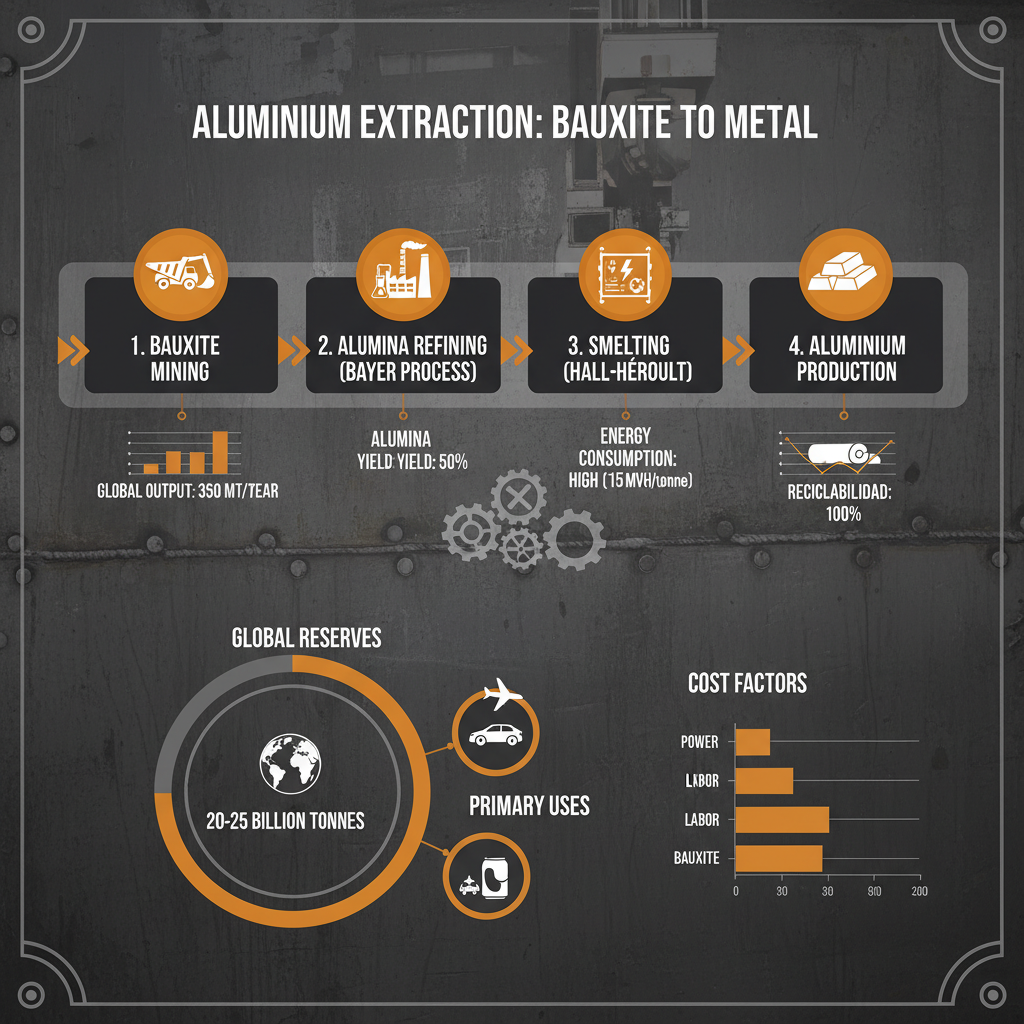
Aluminium is not found in its metallic form in nature; it must be extracted from its ores. Bauxite is the primary ore used for aluminium production. It’s a sedimentary rock rich in aluminium hydroxides, with varying amounts of iron oxides and titanium dioxide. The process of extracting aluminium extracted from bauxite involves several steps, beginning with the Bayer process to refine bauxite into alumina (aluminium oxide).
Following alumina production, the Hall-Héroult process utilizes electrolysis to reduce alumina into metallic aluminium. This process requires substantial energy, making energy efficiency a critical factor in aluminium production costs and environmental impact. The resulting aluminium is a lightweight, strong, and corrosion-resistant metal widely used in countless applications.
The connection to modern industry is profound; without aluminium extracted from bauxite, many of the technological advancements we rely on today – from aircraft and high-speed trains to efficient packaging and renewable energy infrastructure – would be impossible. It's a fundamental building block of the modern world.
Key Properties of aluminium extracted from bauxite
One of the most defining characteristics of aluminium extracted from bauxite is its exceptional strength-to-weight ratio. It’s approximately one-third the density of steel but offers comparable strength, making it ideal for applications where weight reduction is crucial, such as in the aerospace industry. This property also contributes to improved fuel efficiency in vehicles.
Corrosion resistance is another vital property. Aluminium forms a protective oxide layer upon exposure to air, preventing further oxidation and corrosion. This makes aluminium extracted from bauxite suitable for outdoor applications and environments where exposure to moisture and chemicals is significant. This inherent resistance significantly reduces maintenance costs and extends the lifespan of products.
Furthermore, aluminium is an excellent conductor of electricity and heat. This makes it invaluable in electrical transmission lines, heat exchangers, and various electronic devices. Its malleability and ductility also allow for easy shaping and forming into complex geometries, enabling a wide range of design possibilities. These properties make aluminium extracted from bauxite a truly versatile material.
Applications Across Industries
The automotive industry utilizes aluminium extracted from bauxite extensively to reduce vehicle weight, improve fuel efficiency, and enhance performance. From engine blocks and body panels to wheels and chassis components, aluminium’s lightweight nature contributes to significant fuel savings and reduced emissions.
In the aerospace sector, aluminium alloys are critical for aircraft construction, providing the necessary strength and lightweight properties for safe and efficient flight. The packaging industry relies on aluminium for food and beverage cans, offering excellent barrier properties and recyclability. In construction, aluminium is used for window frames, cladding, and roofing due to its durability, corrosion resistance, and aesthetic appeal.
Aluminium Extracted from Bauxite Application Breakdown
Advantages and Long-Term Value
The cost-effectiveness of aluminium extracted from bauxite, particularly when considering its lifecycle cost, is a significant advantage. While initial production costs can be high, its durability, corrosion resistance, and recyclability reduce long-term maintenance and replacement expenses. Moreover, the high value of scrap aluminium incentivizes recycling, contributing to a circular economy.
Sustainability is increasingly crucial. Aluminium is infinitely recyclable without significant loss of properties, minimizing the demand for primary production and reducing energy consumption. The lightweight nature of aluminium contributes to fuel efficiency in transportation, reducing carbon emissions. Socially, the aluminium industry provides employment opportunities and contributes to economic development in producing regions.
Future Trends in Aluminium Production
The development of inert anode technology promises to revolutionize aluminium production by eliminating greenhouse gas emissions associated with the traditional Hall-Héroult process. This breakthrough would significantly reduce the environmental footprint of aluminium extracted from bauxite. Furthermore, advancements in recycling technologies, such as improved sorting and purification methods, are increasing the recovery rate and quality of recycled aluminium.
Digitalization and automation are also transforming the industry, enabling real-time monitoring, process optimization, and improved quality control. The integration of artificial intelligence and machine learning can enhance efficiency, reduce waste, and optimize energy consumption throughout the entire value chain of aluminium extracted from bauxite.
Challenges and Sustainable Solutions
One major challenge is the energy intensity of the aluminium smelting process. Despite advancements, it remains a significant contributor to carbon emissions. Transitioning to renewable energy sources and improving energy efficiency are crucial steps towards decarbonizing the industry. Furthermore, the environmental impact of bauxite mining, including deforestation and water pollution, needs careful management.
Sustainable solutions include implementing responsible mining practices, restoring mined land, and utilizing closed-loop water management systems. Investing in research and development of alternative extraction technologies, such as bioleaching, can also reduce the environmental impact. The development of robust and transparent supply chain traceability systems is essential for ensuring ethical and sustainable sourcing of bauxite.
The industry needs to continue collaborating with governments, communities, and stakeholders to address these challenges and ensure the long-term sustainability of aluminium extracted from bauxite. A commitment to innovation, responsible practices, and circular economy principles is essential for a thriving future.
Summary of Challenges and Solutions in aluminium extracted from bauxite Production
| Challenge |
Environmental Impact |
Economic Consideration |
Proposed Solution |
| High Energy Consumption |
Significant Carbon Footprint |
Increased Production Costs |
Transition to Renewable Energy |
| Bauxite Mining Impacts |
Deforestation and Habitat Loss |
Land Rehabilitation Costs |
Responsible Mining Practices |
| Waste Management |
Red Mud Disposal Challenges |
Environmental Remediation Costs |
Red Mud Utilization Research |
| Supply Chain Transparency |
Ethical Sourcing Concerns |
Reputational Risks |
Blockchain Traceability Systems |
| Recycling Efficiency |
Limited Scrap Recovery |
Loss of Material Value |
Advanced Sorting Technologies |
| Water Usage |
Water Scarcity in Mining Regions |
Water Treatment Costs |
Closed-Loop Water Systems |
FAQS
Bauxite mining can lead to several environmental issues, including deforestation, soil erosion, habitat loss, and water pollution. The clearing of land for mining operations destroys ecosystems and can disrupt local biodiversity. Additionally, the runoff from mining sites can contaminate nearby water sources with sediment and heavy metals. Responsible mining practices, land rehabilitation efforts, and water management systems are crucial for mitigating these impacts.
Aluminium is infinitely recyclable without significant loss of properties, making it a highly sustainable material. Recycling aluminium requires only 5% of the energy needed to produce primary aluminium from bauxite, significantly reducing greenhouse gas emissions. Increased recycling rates lessen the demand for bauxite mining, preserving natural resources and minimizing environmental disruption. It’s a closed-loop system that promotes a circular economy.
Red mud is a byproduct of the Bayer process, used to refine bauxite into alumina. It’s a highly alkaline waste material containing iron oxides and other impurities. Traditionally, red mud has been stored in large impoundments, posing environmental risks due to potential leaks and spills. Ongoing research focuses on finding beneficial uses for red mud, such as in construction materials and soil remediation, to minimize its environmental impact.
Technology is driving significant improvements in aluminium production efficiency. Inert anode technology promises to eliminate greenhouse gas emissions from the smelting process. Automation, digitalization, and artificial intelligence optimize process control, reduce energy consumption, and enhance product quality. Advanced recycling technologies improve scrap recovery rates and material purity, supporting a circular economy.
Global aluminium demand is expected to continue growing, driven by increasing applications in transportation, construction, and packaging. However, the industry is facing pressure to reduce its environmental footprint. Future production will likely focus on sustainable practices, including increased recycling rates, renewable energy sources, and innovative extraction technologies. The adoption of circular economy principles will be crucial for long-term success.
Companies can ensure responsible sourcing of bauxite through supply chain traceability systems, audits of mining operations, and adherence to sustainability standards. Supporting initiatives that promote responsible mining practices and protecting biodiversity are crucial steps. Collaboration with local communities and stakeholders is essential for fostering sustainable development and minimizing negative impacts. Transparency and accountability throughout the supply chain are paramount.
Conclusion
Aluminium extracted from bauxite is an indispensable material in the modern world, offering a unique combination of properties that make it ideal for a vast array of applications. Its lightweight nature, corrosion resistance, conductivity, and recyclability contribute to its ongoing demand. However, the industry faces critical challenges related to energy consumption, environmental impact, and responsible sourcing. Addressing these challenges through innovation, sustainable practices, and collaboration is essential for ensuring the long-term viability of the aluminium industry.
Looking ahead, the future of aluminium extracted from bauxite lies in embracing circular economy principles, investing in renewable energy sources, and developing advanced recycling technologies. By prioritizing sustainability and responsible practices, the industry can continue to provide this vital material while minimizing its environmental footprint and maximizing its societal benefits. For more information on our sustainable aluminium solutions, visit our website: www.qwmetal.com.