Durable PU Screen Panels for Efficient Fine Screening
Introduction to Advanced Screening Technology
In the demanding world of industrial processing, efficient and reliable screening solutions are paramount for optimizing material separation, enhancing product quality, and reducing operational costs. Traditional screening media often fall short when confronted with abrasive materials, corrosion, and persistent clogging, leading to frequent downtime and high maintenance expenses. This challenge has driven the industry towards more advanced, durable, and high-performance materials.
This article delves into the transformative capabilities of pu screen technology, a cornerstone for modern aggregate, mining, and industrial applications. We will explore its innovative material science, detailed manufacturing processes, diverse application scenarios, and compelling technical advantages. By leveraging data-driven insights, we aim to provide a comprehensive understanding for B2B decision-makers and engineers seeking to upgrade their screening operations with superior performance and long-term cost-efficiency.
Industry Trends and Market Dynamics for pu screen
The global demand for high-performance screening media is being shaped by several critical industry trends. As raw material extraction and processing operations increasingly target lower-grade ores and finer particles, the need for robust and precise separation equipment intensifies. The drive for operational efficiency and sustainability mandates solutions that minimize energy consumption, reduce waste, and extend equipment lifespan. Furthermore, stringent environmental regulations are pushing industries towards quieter operations and reduced particulate emissions, where pu screen technology offers distinct advantages.
The market for pu screen panels is experiencing steady growth, propelled by the inherent limitations of conventional metallic screens. While woven wire and perforated steel offer initial cost advantages, their susceptibility to wear, corrosion, and blinding in abrasive or wet conditions leads to higher total cost of ownership (TCO) over time. Polyurethane, with its unique elastomeric properties, is ideally positioned to meet these evolving demands, offering superior resistance to abrasion, impact, and chemical degradation, thereby delivering significant long-term value for a wide range of industrial applications, particularly for polyurethane fine screen applications.
Technical Specifications and Manufacturing Process of pu screen Panels
Material Science Behind Polyurethane
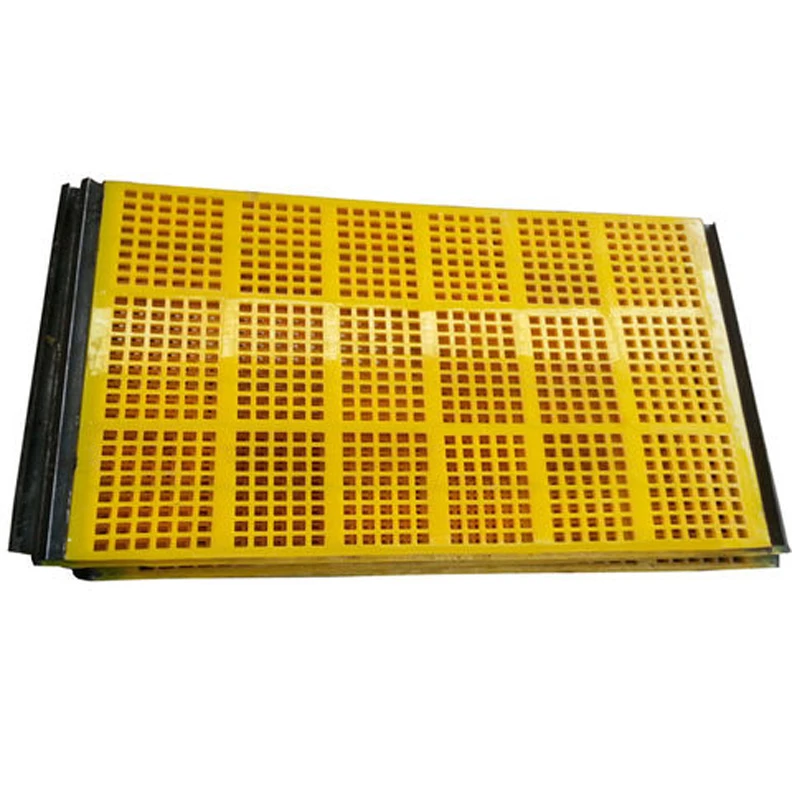
Polyurethane is a polymer composed of organic units joined by carbamate (urethane) links. Its versatility stems from the ability to tailor its properties by varying the types and ratios of its constituent components: polyols and diisocyanates, reacted with catalysts and chain extenders. This allows for a broad spectrum of material characteristics, ranging from rigid and brittle to soft and elastic. For screening applications, specifically for a pu screen panel, a highly elastic and abrasion-resistant formulation is chosen, typically featuring a Shore hardness in the range of 65A to 95A.
Detailed Manufacturing Process Flow
The production of high-quality pu screen panels involves a carefully controlled multi-stage process, ensuring consistent performance and durability:
- Raw Material Preparation: High-grade polyols (e.g., polyether or polyester polyols) and isocyanates (e.g., MDI or TDI) are carefully selected based on the desired physical properties. Additives such as catalysts, chain extenders, cross-linkers, UV stabilizers, and colorants are pre-weighed and prepared.
- Mixing and Casting/Molding: The preheated raw materials are precisely metered and mixed under controlled temperature and pressure conditions. This homogeneous mixture is then typically cast into molds. Common methods include:
- Open Casting: The mixture is poured into open molds and allowed to cure. This is suitable for larger, simpler geometries.
- Reaction Injection Molding (RIM): Used for more complex shapes and higher production volumes, where the mixture is injected into a closed mold under pressure. This ensures better replication of fine details and internal structures.
- Curing: After casting, the polyurethane undergoes a curing process, often involving heat, to achieve its final mechanical properties. This can take several hours to days depending on the formulation and desired hardness.
- Finishing: Once cured, the panels are demolded. This stage includes trimming excess material (flash), drilling mounting holes, or incorporating reinforcement inserts (e.g., steel frames for structural integrity) as per design specifications. Precision CNC machining may be employed for intricate aperture designs or specific panel dimensions, ensuring exact tolerances for optimal screening performance.
- Quality Control & Testing: Each batch undergoes rigorous testing to ensure adherence to technical specifications and industry standards.
- Physical Property Tests: Shore hardness (ASTM D2240), tensile strength (ASTM D412), tear strength (ASTM D624), elongation at break, and abrasion resistance (e.g., Taber Abraser or DIN abrasion test).
- Dimensional Accuracy: Verification of mesh size, panel dimensions, and flatness.
- Adherence to Standards: Compliance with international standards such as ISO 9001 for quality management and relevant ASTM or ANSI standards for material properties and testing.
This meticulous process ensures that each pu screen panel delivers consistent performance, extended service life, and optimal screening efficiency in even the most challenging environments.
Key Product Specifications
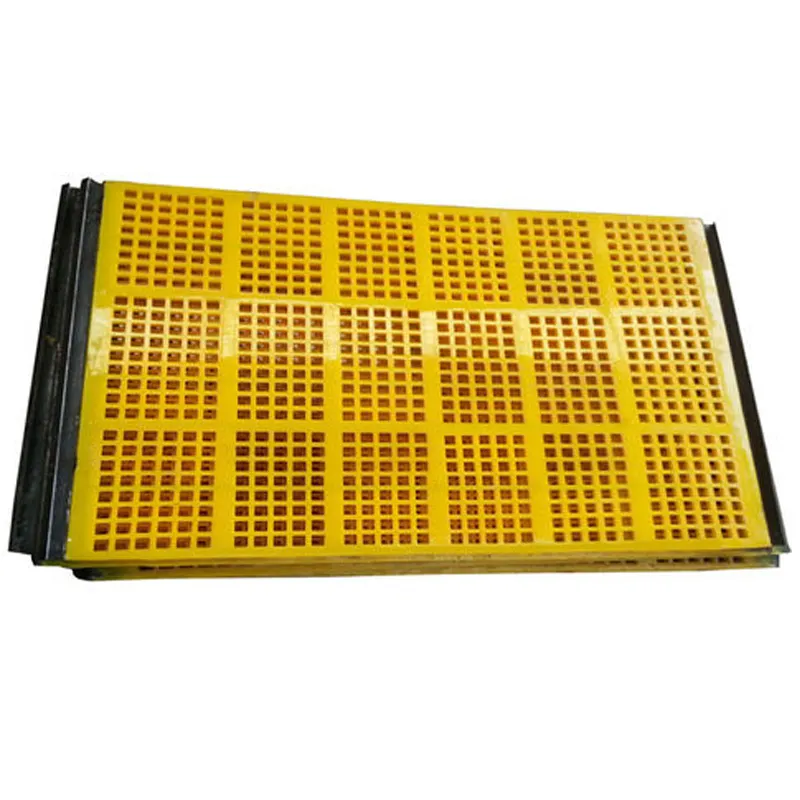
The following table outlines typical technical parameters for high-performance pu screen panel products, showcasing their robust design and suitability for demanding applications:
| Parameter | Typical Range/Value | Description/Significance |
|---|---|---|
| Material Type | High-grade Polyurethane Elastomer | Optimized for abrasion and impact resistance. |
| Shore Hardness | 65A - 95A | Indicates material stiffness; higher for abrasive materials, lower for finer screening. |
| Aperture Size | 0.1 mm - 150 mm (various shapes) | Critical for particle sizing and classification accuracy. |
| Open Area | Up to 45% (design dependent) | Affects throughput capacity; higher open area for higher capacity. |
| Panel Dimensions | Modular design (e.g., 305x305mm, 300x1000mm) | Interchangeable and adaptable to various screen deck configurations. |
| Operating Temperature | -30°C to +80°C | Ensures stability in diverse climatic and process conditions. |
| Service Life | 4-10 times longer than steel mesh | Significantly reduces maintenance costs and downtime. |
| Tensile Strength | ~30-50 MPa | Resistance to tearing and stretching under load. |
Application Scenarios and Technical Advantages of pu screen
Target Industries
The robust and versatile nature of pu screen panels makes them indispensable across a multitude of heavy industrial sectors:
- Mining and Aggregates: Used for primary and secondary screening of various ores (iron ore, coal, copper, gold), gravel, sand, and crushed stone. Their superior wear resistance extends life in highly abrasive environments.
- Metallurgy: Critical for screening sinter, coke, and other raw materials in steel mills and non-ferrous metal production, where resistance to high temperatures and impact is vital.
- Chemical Processing: Handling corrosive chemicals and slurries, pu screen panels offer excellent chemical resistance, reducing degradation and ensuring process integrity.
- Construction and Demolition Waste Recycling: Efficiently separating different sizes of recycled concrete, asphalt, and other demolition debris.
- Water Supply & Drainage: Utilized in wastewater treatment plants for solid-liquid separation, due to their non-corrosive nature and resistance to bio-fouling.
- Food Processing: While less common than in other heavy industries, specific food-grade polyurethane formulations can be used for screening granular food products, leveraging their cleanability and wear resistance.
Key Technical Advantages
Choosing pu screen technology offers a compelling suite of advantages that translate directly into operational efficiencies and significant cost savings:
- Superior Abrasion Resistance: Polyurethane's elastomeric nature allows it to absorb impact energy, resisting cutting and gouging from abrasive materials far better than steel. This leads to a service life typically 4 to 10 times longer than conventional woven wire screens, drastically reducing replacement frequency and maintenance.
- Excellent Corrosion Resistance: Unlike metallic screens, polyurethane is inherently resistant to rust and a wide range of chemicals, making it ideal for wet screening, dewatering, and applications involving acids, alkalis, or saline solutions found in industrial water treatment and mineral processing.
- Reduced Clogging and Blinding: The flexible nature of polyurethane, combined with its tapered apertures (especially for polyurethane fine screen applications), allows it to vibrate and shed sticky or near-size particles, effectively preventing blinding and maintaining a consistent open area for maximum throughput. This significantly improves screening efficiency, particularly with damp materials.
- Lower Noise Levels: The dampening properties of polyurethane significantly reduce operational noise compared to metallic screens. This contributes to a safer and more compliant working environment, often meeting stricter occupational noise exposure regulations.
- Impact Resistance: Polyurethane can withstand heavy impacts from large aggregates or rockfalls without deforming or breaking, unlike brittle steel screens which can suffer catastrophic failures, further enhancing durability and safety.
- Energy Saving Potential: Being lighter than steel, polyurethane panels reduce the overall vibrating mass, potentially leading to lower power consumption for the screen deck motors and reduced structural stress on the screening equipment.
- Ease of Installation and Maintenance: Modular pu screen panels are generally lighter and easier to handle than large metallic sections, simplifying installation and replacement. Their longer service life naturally translates to fewer change-outs, minimizing labor costs and equipment downtime.
Customized Solutions and Vendor Comparison for pu screen Panels
Tailored pu screen Solutions
Recognizing that no two industrial applications are identical, leading manufacturers of pu screen panels offer extensive customization options. This flexibility ensures that screening media are perfectly aligned with specific operational requirements, material characteristics, and existing equipment configurations. Customization parameters typically include:
- Aperture Design: Beyond standard square or rectangular openings, custom shapes like slotted, circular, or labyrinth apertures can be designed to optimize throughput for specific material types, reduce blinding, or improve classification efficiency for particular particle geometries.
- Panel Dimensions and Thickness: Panels can be fabricated to fit virtually any screen deck size and type, including tensioned, bolt-down, pin-and-sleeve, or modular snap-in systems. Thickness can be varied to enhance wear life or optimize flexibility for anti-blinding.
- Polyurethane Formulation: Different polyurethane compounds can be used to optimize properties such as hardness (Shore A), chemical resistance, temperature resilience, and anti-static properties, precisely matching the application's unique demands.
- Reinforcement and Inserts: Steel reinforcing frames, embedded tensioning hooks, or wear-resistant inserts can be integrated during the molding process to enhance structural integrity, simplify installation, or prolong life in high-impact zones.
Engaging with manufacturers that possess strong R&D capabilities and a deep understanding of material science is crucial for developing optimal customized solutions.
Vendor Comparison: Polyurethane vs. Traditional Screening Media
When evaluating screening media, a holistic view of performance, durability, and total cost of ownership is essential. The following comparison highlights the distinct advantages of pu screen panels over traditional alternatives like woven wire mesh and perforated steel plates.
| Feature | Polyurethane Screen Panel | Woven Wire Mesh | Perforated Steel Plate |
|---|---|---|---|
| Abrasion Resistance | Excellent (4-10x longer life) | Poor to Moderate | Good, but prone to wear at edges |
| Clogging/Blinding | Very Low (flexible apertures) | High (especially with damp material) | Moderate to High |
| Corrosion Resistance | Excellent | Poor (rusts easily) | Poor (rusts easily) |
| Noise Reduction | Significant (up to 9 dB) | Poor (high noise generation) | Moderate |
| Installation/Maintenance | Easy, less frequent replacement | Frequent replacement, labor-intensive | Moderate, less frequent than wire, but heavy |
| Cost (Initial) | Higher | Lower | Lower |
| Total Cost of Ownership | Significantly Lower | Higher (due to frequent replacement/downtime) | Higher |
This comparison underscores why, despite a potentially higher initial investment, pu screen panels represent a superior long-term economic and operational choice for demanding industrial applications, especially where a polyurethane fine screen is required for precision sizing.
Application Case Studies and Customer Experience
Case Study 1: Large-Scale Iron Ore Processing
A major mining operation in Western Australia faced persistent challenges with severe abrasion and blinding on their primary vibrating screens, using traditional woven wire mesh for iron ore classification. The screens required replacement every 3-4 weeks, leading to significant maintenance costs and production downtime. Upon switching to high-abrasion-resistant pu screen panels with modular snap-in installation, the mine reported an average service life increase to 6-8 months – a 600-800% improvement. This translated to an estimated 25% reduction in annual screen media expenditure and a substantial increase in overall plant uptime, contributing to higher throughput and profitability. The modular design also reduced change-out times by 40%.
Case Study 2: Aggregate Plant Fine Screening
An aggregate producer in the Midwest United States struggled with wet sand and gravel blinding their fine screening decks, impacting the quality of their washed product. Conventional metallic screens could not maintain consistent open area, leading to oversized material in the fines and reduced product consistency. Implementing a polyurethane fine screen solution, specifically designed with tapered apertures, significantly mitigated blinding issues. The flexible polyurethane surface and optimized aperture design allowed sticky particles to pass or be shed more effectively. The plant observed a 15% increase in screening efficiency, a marked improvement in product grading, and a reduction in material recirculation, leading to energy savings and enhanced compliance with product specifications. Customer feedback highlighted the ease of cleaning and the noticeable reduction in operational noise as key benefits.
Case Study 3: Industrial Wastewater Treatment
A large petrochemical complex needed to upgrade its primary solids separation stage in its wastewater treatment facility. Metallic screens were prone to corrosion from process chemicals and bio-fouling, resulting in frequent maintenance and premature failure. By integrating custom-engineered pu screen panels, the facility achieved superior resistance to chemical attack and significantly reduced biological build-up due to the smooth, non-porous polyurethane surface. The screen life extended from an average of 1 year to over 4 years, dramatically lowering replacement costs and operational interruptions. The plant engineers specifically praised the robustness and low maintenance profile of the polyurethane solution in their corrosive environment.
Trustworthiness, Support, and FAQ
Commitment to Quality and Support
Our commitment to delivering high-performance pu screen solutions is underpinned by stringent quality control and comprehensive customer support. Our manufacturing processes adhere to international standards, including ISO 9001 certified quality management systems, ensuring every product meets the highest benchmarks for durability and performance. We collaborate with industry leaders and maintain a strong track record of serving critical sectors globally, reinforcing our authoritative position in the market.
Lead Time and Fulfillment
Standard pu screen panel products typically have a lead time of 2-4 weeks, depending on order volume and specific configurations. Customized solutions may require 4-8 weeks for design, mold fabrication, and production. We maintain efficient supply chain logistics to ensure timely delivery and minimize impact on your operational schedules. Expedited shipping options are available upon request.
Warranty Commitments
All our pu screen products come with a standard 12-month limited warranty against manufacturing defects from the date of purchase. This warranty covers material and workmanship under normal operating conditions. Extended warranty options are available for specific project requirements. Full warranty details are provided with each order and are available upon request.
Customer Support and Technical Assistance
Our dedicated team of technical experts and sales engineers is available to provide comprehensive support, from initial consultation and screen design recommendations to installation guidance and troubleshooting. We offer:
- Pre-sales Consultation: Expert advice on material selection, aperture optimization, and panel configuration based on your specific application and material characteristics.
- Installation Support: Guidance on proper installation techniques to maximize screen life and performance.
- After-sales Service: Prompt assistance for any operational queries, performance evaluations, or warranty claims.
- Global Reach: Support services available across our operational regions, ensuring local expertise with global standards.
Frequently Asked Questions (FAQ) about pu screen Panels
- Q1: How does polyurethane screen compare to woven wire mesh in terms of wear life?
- A1: Polyurethane screens typically offer 4 to 10 times the wear life of woven wire mesh, especially in highly abrasive applications. This significant difference is due to polyurethane's superior elasticity and resistance to impact and abrasion, leading to substantial cost savings and reduced downtime.
- Q2: Can pu screen panels be used in wet screening applications?
- A2: Absolutely. Polyurethane's inherent resistance to corrosion and moisture makes it an excellent choice for wet screening and dewatering processes. Its flexible nature also helps prevent blinding when processing damp or sticky materials.
- Q3: What are the main benefits of using a polyurethane fine screen?
- A3: For fine screening, polyurethane offers precise classification, superior anti-blinding characteristics due to its flexible apertures, and extended wear life compared to metallic fine screens. This results in improved product quality, higher throughput, and reduced operational headaches associated with clogged screens.
- Q4: Are custom sizes and aperture shapes available?
- A4: Yes, we offer extensive customization options for panel dimensions, thickness, aperture sizes, and shapes (e.g., square, rectangular, slotted, circular) to perfectly match your specific operational requirements and existing screen deck configurations.
- Q5: How does the initial cost of pu screen panels compare to traditional screens?
- A5: The initial investment for polyurethane screens can be higher than for woven wire mesh. However, considering the significantly longer service life, reduced downtime, lower maintenance requirements, and improved screening efficiency, the total cost of ownership (TCO) for polyurethane is almost invariably lower over the operational lifespan.
Conclusion
The evolution of industrial screening technology is inextricably linked to the advancements in material science. Pu screen panels stand at the forefront of this evolution, offering an unparalleled combination of durability, efficiency, and operational cost-effectiveness. By addressing the critical challenges of abrasion, corrosion, and blinding that plague traditional screening media, polyurethane solutions empower industries to achieve higher throughput, improve product quality, and significantly reduce maintenance expenditures.
For B2B decision-makers and engineers navigating the complexities of modern industrial processing, investing in advanced pu screen technology is not merely an upgrade; it is a strategic imperative for long-term operational excellence and sustainable growth. The blend of superior material properties, precision manufacturing, and comprehensive support ensures that these screening solutions deliver tangible value across diverse and demanding applications.
References
- Smith, J. (2020). Innovations in Polyurethane Elastomers for Mining Applications. Journal of Mineral Processing, 45(3), 112-120.
- International Organization for Standardization. ISO 9001:2015 - Quality management systems - Requirements.
- ASTM International. ASTM D2240 - Standard Test Method for Rubber Property—Durometer Hardness.
- Jones, A. (2018). Comparative Study of Screening Media in Aggregate Production. Aggregates World Magazine, 15(2), 34-40.
- European Agency for Safety and Health at Work (EU-OSHA). Noise and vibration at work.
Durable PU Screen Panels for Efficient Fine Screening
Introduction to Advanced Screening Technology
In the demanding world of industrial processing, efficient and reliable screening solutions are paramount for optimizing material separation, enhancing product quality, and reducing operational costs. Traditional screening media often fall short when confronted with abrasive materials, corrosion, and persistent clogging, leading to frequent downtime and high maintenance expenses. This challenge has driven the industry towards more advanced, durable, and high-performance materials.
This article delves into the transformative capabilities of pu screen technology, a cornerstone for modern aggregate, mining, and industrial applications. We will explore its innovative material science, detailed manufacturing processes, diverse application scenarios, and compelling technical advantages. By leveraging data-driven insights, we aim to provide a comprehensive understanding for B2B decision-makers and engineers seeking to upgrade their screening operations with superior performance and long-term cost-efficiency.
Industry Trends and Market Dynamics for pu screen
The global demand for high-performance screening media is being shaped by several critical industry trends. As raw material extraction and processing operations increasingly target lower-grade ores and finer particles, the need for robust and precise separation equipment intensifies. The drive for operational efficiency and sustainability mandates solutions that minimize energy consumption, reduce waste, and extend equipment lifespan. Furthermore, stringent environmental regulations are pushing industries towards quieter operations and reduced particulate emissions, where pu screen technology offers distinct advantages.
The market for pu screen panels is experiencing steady growth, propelled by the inherent limitations of conventional metallic screens. While woven wire and perforated steel offer initial cost advantages, their susceptibility to wear, corrosion, and blinding in abrasive or wet conditions leads to higher total cost of ownership (TCO) over time. Polyurethane, with its unique elastomeric properties, is ideally positioned to meet these evolving demands, offering superior resistance to abrasion, impact, and chemical degradation, thereby delivering significant long-term value for a wide range of industrial applications, particularly for polyurethane fine screen applications.
Technical Specifications and Manufacturing Process of pu screen Panels
Material Science Behind Polyurethane
Polyurethane is a polymer composed of organic units joined by carbamate (urethane) links. Its versatility stems from the ability to tailor its properties by varying the types and ratios of its constituent components: polyols and diisocyanates, reacted with catalysts and chain extenders. This allows for a broad spectrum of material characteristics, ranging from rigid and brittle to soft and elastic. For screening applications, specifically for a pu screen panel, a highly elastic and abrasion-resistant formulation is chosen, typically featuring a Shore hardness in the range of 65A to 95A.
Detailed Manufacturing Process Flow
The production of high-quality pu screen panels involves a carefully controlled multi-stage process, ensuring consistent performance and durability:
- Raw Material Preparation: High-grade polyols (e.g., polyether or polyester polyols) and isocyanates (e.g., MDI or TDI) are carefully selected based on the desired physical properties. Additives such as catalysts, chain extenders, cross-linkers, UV stabilizers, and colorants are pre-weighed and prepared.
- Mixing and Casting/Molding: The preheated raw materials are precisely metered and mixed under controlled temperature and pressure conditions. This homogeneous mixture is then typically cast into molds. Common methods include:
- Open Casting: The mixture is poured into open molds and allowed to cure. This is suitable for larger, simpler geometries.
- Reaction Injection Molding (RIM): Used for more complex shapes and higher production volumes, where the mixture is injected into a closed mold under pressure. This ensures better replication of fine details and internal structures.
- Curing: After casting, the polyurethane undergoes a curing process, often involving heat, to achieve its final mechanical properties. This can take several hours to days depending on the formulation and desired hardness.
- Finishing: Once cured, the panels are demolded. This stage includes trimming excess material (flash), drilling mounting holes, or incorporating reinforcement inserts (e.g., steel frames for structural integrity) as per design specifications. Precision CNC machining may be employed for intricate aperture designs or specific panel dimensions, ensuring exact tolerances for optimal screening performance.
- Quality Control & Testing: Each batch undergoes rigorous testing to ensure adherence to technical specifications and industry standards.
- Physical Property Tests: Shore hardness (ASTM D2240), tensile strength (ASTM D412), tear strength (ASTM D624), elongation at break, and abrasion resistance (e.g., Taber Abraser or DIN abrasion test).
- Dimensional Accuracy: Verification of mesh size, panel dimensions, and flatness.
- Adherence to Standards: Compliance with international standards such as ISO 9001 for quality management and relevant ASTM or ANSI standards for material properties and testing.
This meticulous process ensures that each pu screen panel delivers consistent performance, extended service life, and optimal screening efficiency in even the most challenging environments.
Key Product Specifications
The following table outlines typical technical parameters for high-performance pu screen panel products, showcasing their robust design and suitability for demanding applications:
| Parameter | Typical Range/Value | Description/Significance |
|---|---|---|
| Material Type | High-grade Polyurethane Elastomer | Optimized for abrasion and impact resistance. |
| Shore Hardness | 65A - 95A | Indicates material stiffness; higher for abrasive materials, lower for finer screening. |
| Aperture Size | 0.1 mm - 150 mm (various shapes) | Critical for particle sizing and classification accuracy. |
| Open Area | Up to 45% (design dependent) | Affects throughput capacity; higher open area for higher capacity. |
| Panel Dimensions | Modular design (e.g., 305x305mm, 300x1000mm) | Interchangeable and adaptable to various screen deck configurations. |
| Operating Temperature | -30°C to +80°C | Ensures stability in diverse climatic and process conditions. |
| Service Life | 4-10 times longer than steel mesh | Significantly reduces maintenance costs and downtime. |
| Tensile Strength | ~30-50 MPa | Resistance to tearing and stretching under load. |
Application Scenarios and Technical Advantages of pu screen
Target Industries
The robust and versatile nature of pu screen panels makes them indispensable across a multitude of heavy industrial sectors:
- Mining and Aggregates: Used for primary and secondary screening of various ores (iron ore, coal, copper, gold), gravel, sand, and crushed stone. Their superior wear resistance extends life in highly abrasive environments.
- Metallurgy: Critical for screening sinter, coke, and other raw materials in steel mills and non-ferrous metal production, where resistance to high temperatures and impact is vital.
- Chemical Processing: Handling corrosive chemicals and slurries, pu screen panels offer excellent chemical resistance, reducing degradation and ensuring process integrity.
- Construction and Demolition Waste Recycling: Efficiently separating different sizes of recycled concrete, asphalt, and other demolition debris.
- Water Supply & Drainage: Utilized in wastewater treatment plants for solid-liquid separation, due to their non-corrosive nature and resistance to bio-fouling.
- Food Processing: While less common than in other heavy industries, specific food-grade polyurethane formulations can be used for screening granular food products, leveraging their cleanability and wear resistance.
Key Technical Advantages
Choosing pu screen technology offers a compelling suite of advantages that translate directly into operational efficiencies and significant cost savings:
- Superior Abrasion Resistance: Polyurethane's elastomeric nature allows it to absorb impact energy, resisting cutting and gouging from abrasive materials far better than steel. This leads to a service life typically 4 to 10 times longer than conventional woven wire screens, drastically reducing replacement frequency and maintenance.
- Excellent Corrosion Resistance: Unlike metallic screens, polyurethane is inherently resistant to rust and a wide range of chemicals, making it ideal for wet screening, dewatering, and applications involving acids, alkalis, or saline solutions found in industrial water treatment and mineral processing.
- Reduced Clogging and Blinding: The flexible nature of polyurethane, combined with its tapered apertures (especially for polyurethane fine screen applications), allows it to vibrate and shed sticky or near-size particles, effectively preventing blinding and maintaining a consistent open area for maximum throughput. This significantly improves screening efficiency, particularly with damp materials.
- Lower Noise Levels: The dampening properties of polyurethane significantly reduce operational noise compared to metallic screens. This contributes to a safer and more compliant working environment, often meeting stricter occupational noise exposure regulations.
- Impact Resistance: Polyurethane can withstand heavy impacts from large aggregates or rockfalls without deforming or breaking, unlike brittle steel screens which can suffer catastrophic failures, further enhancing durability and safety.
- Energy Saving Potential: Being lighter than steel, polyurethane panels reduce the overall vibrating mass, potentially leading to lower power consumption for the screen deck motors and reduced structural stress on the screening equipment.
- Ease of Installation and Maintenance: Modular pu screen panels are generally lighter and easier to handle than large metallic sections, simplifying installation and replacement. Their longer service life naturally translates to fewer change-outs, minimizing labor costs and equipment downtime.
Customized Solutions and Vendor Comparison for pu screen Panels
Tailored pu screen Solutions
Recognizing that no two industrial applications are identical, leading manufacturers of pu screen panels offer extensive customization options. This flexibility ensures that screening media are perfectly aligned with specific operational requirements, material characteristics, and existing equipment configurations. Customization parameters typically include:
- Aperture Design: Beyond standard square or rectangular openings, custom shapes like slotted, circular, or labyrinth apertures can be designed to optimize throughput for specific material types, reduce blinding, or improve classification efficiency for particular particle geometries.
- Panel Dimensions and Thickness: Panels can be fabricated to fit virtually any screen deck size and type, including tensioned, bolt-down, pin-and-sleeve, or modular snap-in systems. Thickness can be varied to enhance wear life or optimize flexibility for anti-blinding.
- Polyurethane Formulation: Different polyurethane compounds can be used to optimize properties such as hardness (Shore A), chemical resistance, temperature resilience, and anti-static properties, precisely matching the application's unique demands.
- Reinforcement and Inserts: Steel reinforcing frames, embedded tensioning hooks, or wear-resistant inserts can be integrated during the molding process to enhance structural integrity, simplify installation, or prolong life in high-impact zones.
Engaging with manufacturers that possess strong R&D capabilities and a deep understanding of material science is crucial for developing optimal customized solutions.
Vendor Comparison: Polyurethane vs. Traditional Screening Media
When evaluating screening media, a holistic view of performance, durability, and total cost of ownership is essential. The following comparison highlights the distinct advantages of pu screen panels over traditional alternatives like woven wire mesh and perforated steel plates.
| Feature | Polyurethane Screen Panel | Woven Wire Mesh | Perforated Steel Plate |
|---|---|---|---|
| Abrasion Resistance | Excellent (4-10x longer life) | Poor to Moderate | Good, but prone to wear at edges |
| Clogging/Blinding | Very Low (flexible apertures) | High (especially with damp material) | Moderate to High |
| Corrosion Resistance | Excellent | Poor (rusts easily) | Poor (rusts easily) |
| Noise Reduction | Significant (up to 9 dB) | Poor (high noise generation) | Moderate |
| Installation/Maintenance | Easy, less frequent replacement | Frequent replacement, labor-intensive | Moderate, less frequent than wire, but heavy |
| Cost (Initial) | Higher | Lower | Lower |
| Total Cost of Ownership | Significantly Lower | Higher (due to frequent replacement/downtime) | Higher |
This comparison underscores why, despite a potentially higher initial investment, pu screen panels represent a superior long-term economic and operational choice for demanding industrial applications, especially where a polyurethane fine screen is required for precision sizing.
Application Case Studies and Customer Experience
Case Study 1: Large-Scale Iron Ore Processing
A major mining operation in Western Australia faced persistent challenges with severe abrasion and blinding on their primary vibrating screens, using traditional woven wire mesh for iron ore classification. The screens required replacement every 3-4 weeks, leading to significant maintenance costs and production downtime. Upon switching to high-abrasion-resistant pu screen panels with modular snap-in installation, the mine reported an average service life increase to 6-8 months – a 600-800% improvement. This translated to an estimated 25% reduction in annual screen media expenditure and a substantial increase in overall plant uptime, contributing to higher throughput and profitability. The modular design also reduced change-out times by 40%.
Case Study 2: Aggregate Plant Fine Screening
An aggregate producer in the Midwest United States struggled with wet sand and gravel blinding their fine screening decks, impacting the quality of their washed product. Conventional metallic screens could not maintain consistent open area, leading to oversized material in the fines and reduced product consistency. Implementing a polyurethane fine screen solution, specifically designed with tapered apertures, significantly mitigated blinding issues. The flexible polyurethane surface and optimized aperture design allowed sticky particles to pass or be shed more effectively. The plant observed a 15% increase in screening efficiency, a marked improvement in product grading, and a reduction in material recirculation, leading to energy savings and enhanced compliance with product specifications. Customer feedback highlighted the ease of cleaning and the noticeable reduction in operational noise as key benefits.
Case Study 3: Industrial Wastewater Treatment
A large petrochemical complex needed to upgrade its primary solids separation stage in its wastewater treatment facility. Metallic screens were prone to corrosion from process chemicals and bio-fouling, resulting in frequent maintenance and premature failure. By integrating custom-engineered pu screen panels, the facility achieved superior resistance to chemical attack and significantly reduced biological build-up due to the smooth, non-porous polyurethane surface. The screen life extended from an average of 1 year to over 4 years, dramatically lowering replacement costs and operational interruptions. The plant engineers specifically praised the robustness and low maintenance profile of the polyurethane solution in their corrosive environment.
Trustworthiness, Support, and FAQ
Commitment to Quality and Support
Our commitment to delivering high-performance pu screen solutions is underpinned by stringent quality control and comprehensive customer support. Our manufacturing processes adhere to international standards, including ISO 9001 certified quality management systems, ensuring every product meets the highest benchmarks for durability and performance. We collaborate with industry leaders and maintain a strong track record of serving critical sectors globally, reinforcing our authoritative position in the market.
Lead Time and Fulfillment
Standard pu screen panel products typically have a lead time of 2-4 weeks, depending on order volume and specific configurations. Customized solutions may require 4-8 weeks for design, mold fabrication, and production. We maintain efficient supply chain logistics to ensure timely delivery and minimize impact on your operational schedules. Expedited shipping options are available upon request.
Warranty Commitments
All our pu screen products come with a standard 12-month limited warranty against manufacturing defects from the date of purchase. This warranty covers material and workmanship under normal operating conditions. Extended warranty options are available for specific project requirements. Full warranty details are provided with each order and are available upon request.
Customer Support and Technical Assistance
Our dedicated team of technical experts and sales engineers is available to provide comprehensive support, from initial consultation and screen design recommendations to installation guidance and troubleshooting. We offer:
- Pre-sales Consultation: Expert advice on material selection, aperture optimization, and panel configuration based on your specific application and material characteristics.
- Installation Support: Guidance on proper installation techniques to maximize screen life and performance.
- After-sales Service: Prompt assistance for any operational queries, performance evaluations, or warranty claims.
- Global Reach: Support services available across our operational regions, ensuring local expertise with global standards.
Frequently Asked Questions (FAQ) about pu screen Panels
- Q1: How does polyurethane screen compare to woven wire mesh in terms of wear life?
- A1: Polyurethane screens typically offer 4 to 10 times the wear life of woven wire mesh, especially in highly abrasive applications. This significant difference is due to polyurethane's superior elasticity and resistance to impact and abrasion, leading to substantial cost savings and reduced downtime.
- Q2: Can pu screen panels be used in wet screening applications?
- A2: Absolutely. Polyurethane's inherent resistance to corrosion and moisture makes it an excellent choice for wet screening and dewatering processes. Its flexible nature also helps prevent blinding when processing damp or sticky materials.
- Q3: What are the main benefits of using a polyurethane fine screen?
- A3: For fine screening, polyurethane offers precise classification, superior anti-blinding characteristics due to its flexible apertures, and extended wear life compared to metallic fine screens. This results in improved product quality, higher throughput, and reduced operational headaches associated with clogged screens.
- Q4: Are custom sizes and aperture shapes available?
- A4: Yes, we offer extensive customization options for panel dimensions, thickness, aperture sizes, and shapes (e.g., square, rectangular, slotted, circular) to perfectly match your specific operational requirements and existing screen deck configurations.
- Q5: How does the initial cost of pu screen panels compare to traditional screens?
- A5: The initial investment for polyurethane screens can be higher than for woven wire mesh. However, considering the significantly longer service life, reduced downtime, lower maintenance requirements, and improved screening efficiency, the total cost of ownership (TCO) for polyurethane is almost invariably lower over the operational lifespan.
Conclusion
The evolution of industrial screening technology is inextricably linked to the advancements in material science. Pu screen panels stand at the forefront of this evolution, offering an unparalleled combination of durability, efficiency, and operational cost-effectiveness. By addressing the critical challenges of abrasion, corrosion, and blinding that plague traditional screening media, polyurethane solutions empower industries to achieve higher throughput, improve product quality, and significantly reduce maintenance expenditures.
For B2B decision-makers and engineers navigating the complexities of modern industrial processing, investing in advanced pu screen technology is not merely an upgrade; it is a strategic imperative for long-term operational excellence and sustainable growth. The blend of superior material properties, precision manufacturing, and comprehensive support ensures that these screening solutions deliver tangible value across diverse and demanding applications.
References
- Smith, J. (2020). Innovations in Polyurethane Elastomers for Mining Applications. Journal of Mineral Processing, 45(3), 112-120.
- International Organization for Standardization. ISO 9001:2015 - Quality management systems - Requirements.
- ASTM International. ASTM D2240 - Standard Test Method for Rubber Property—Durometer Hardness.
- Jones, A. (2018). Comparative Study of Screening Media in Aggregate Production. Aggregates World Magazine, 15(2), 34-40.
- European Agency for Safety and Health at Work (EU-OSHA). Noise and vibration at work.
Related Products
Our main products are polyurethane lined pipes, mining equipment fittings and metal hoses.