Types of Cyclone Separator: Efficient, Compact, Durable
Types Of Cyclone Separator: what really matters on the plant floor
I’ve spent enough time in dusty compressor rooms and clinker lines to know this: choose your cyclone badly and you’ll pay for it in pressure drop, wear, and downtime. Choose it well and—quietly, reliably—it just works. Below is a practical field guide to Types Of Cyclone Separator, how they’re specified, where they shine, and what buyers (actually) compare before issuing a PO.
Industry snapshot and trends
- Regulatory pressure: tighter PM10/PM2.5 limits push upgrades to high-efficiency geometries and multicyclones.
- Materials shift: more ceramic-lined cones and SiC in high-silica dust; duplex and 316L in corrosive gas.
- Data-first: buyers ask for d50, grade efficiency curves, and ISO/EPA test references—not just a brochure claim.
Core types you’ll actually encounter
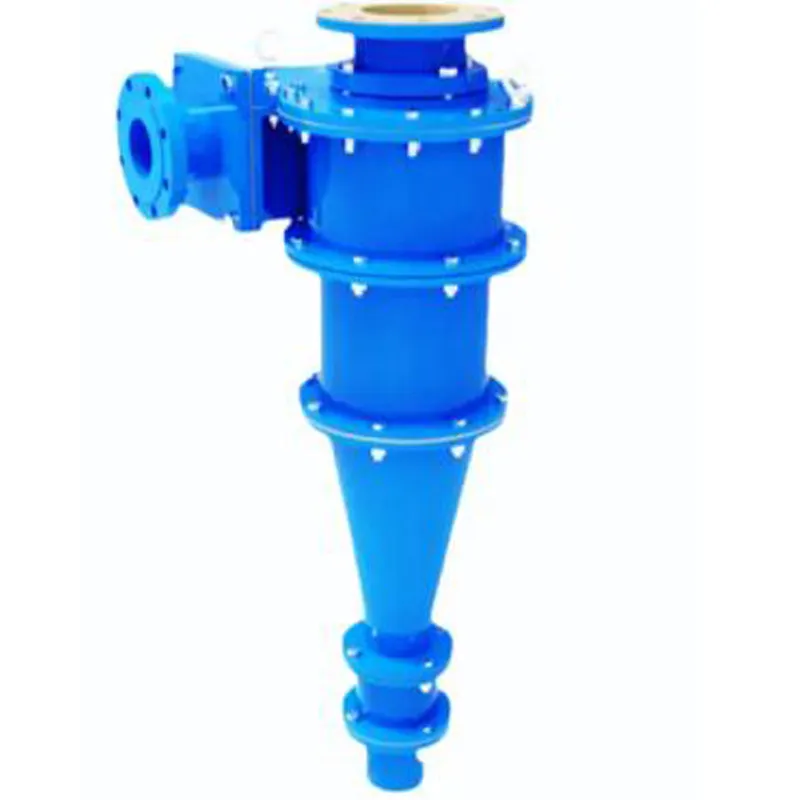
- High-efficiency (Stairmand-like) cyclones: narrow cones, higher L/D, excellent for fine dust; higher ΔP.
- High-throughput cyclones: lower pressure drop for big volumes; better on coarse fractions.
- Multicyclone arrays: many small tubes in parallel; good turndown and efficiency in boilers, biomass, dryers.
- Abrasion-resistant cyclones: hardfacing or ceramic liners at inlet/throat/cone for quartz, clinker, fly ash.
- Axial-inlet vs tangential-inlet: axial saves footprint in tight retrofits; tangential is the old reliable.
Quick product specs (typical, real-world may vary)
| Parameter | Typical Range | Notes |
|---|---|---|
| Flow capacity | 1,000–150,000 m³/h per body ≈ | Scale via multicyclone banks |
| Pressure drop (ΔP) | 0.8–2.5 kPa | Function of inlet velocity, geometry |
| Cut size (d50) | ≈ 5–15 μm | Higher with coarse designs |
| Temperature | -20 to 450°C | Alloy/liner dependent |
| Materials | Q235, 304/316L, Corten, ceramic-lined | Rubber/PU liners optional |
How it works (and how we spec it)
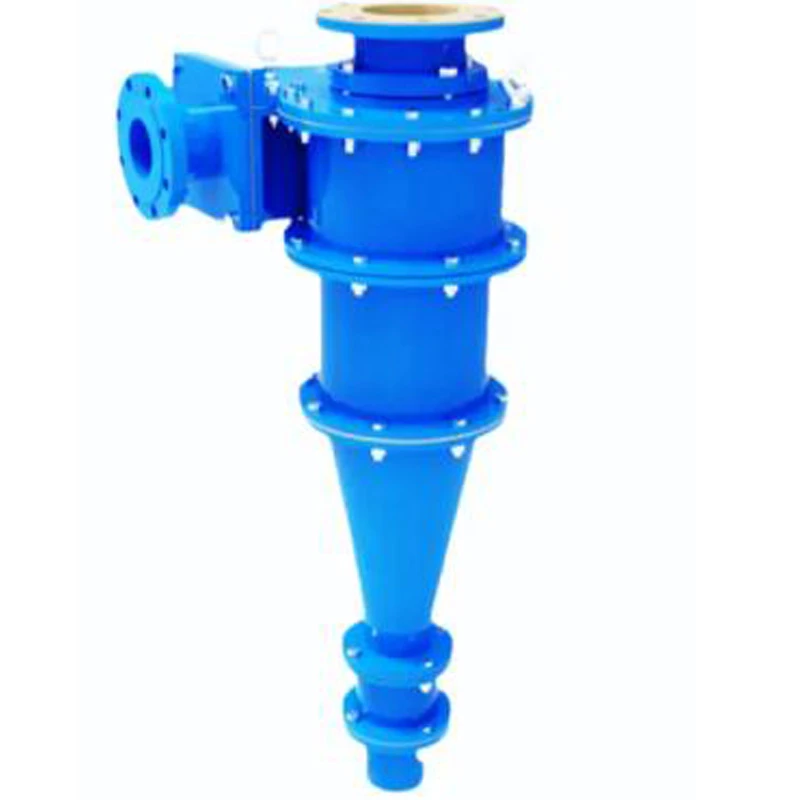
Gas enters tangentially, creating a forced vortex; heavy particles migrate to the wall, spiral down to the dust hopper, and exit via rotary airlock. Clean gas reverses through the vortex finder. In practice, we choose geometry by target d50, inlet velocity (usually 15–25 m/s), allowable ΔP, and dust abrasiveness. Wear points: inlet lip, barrel, lower cone—this is where ceramic tiles pay for themselves.
Testing and validation: grade efficiency curves with isokinetic sampling (ISO 9096/EPA Methods 17/201A), ΔP logging, and leak checks. I’ve seen service life from 5–15 years; lined bodies keep shape far longer in silica/cement duties.
Applications and advantages
- Mining, quarrying, cement kilns, clinker coolers, dryers, woodworking, grain handling, chemical reactors.
- No moving internals, minimal maintenance, high-temperature tolerance, small footprint, rugged in corrosive/abrasive gas with liner options.
Vendor comparison (what buyers ask us to line up)
| Vendor | Origin | Certs | Customization | Lead time ≈ |
|---|---|---|---|---|
| QW Metal (Cyclone Separator) | Yuqiao Village, Jing County, Hebei | ISO 9001, ISO 14001 | Geometry, liners, alloys, flanges | 3–6 weeks |
| Vendor A | EU | ISO 9001 | Standard sizes, limited liners | 6–10 weeks |
| Vendor B | US | ISO 9001 | Custom alloy; higher cost | 5–8 weeks |
Case notes (real plants)
- Cement mill retrofit: swapped legacy cyclone for high-efficiency, ceramic-lined design; stack PM cut ≈38%, ΔP +0.3 kPa; liner inspection at 9 months showed negligible wear.
- Grain handling: multicyclone on 45,000 m³/h spouting; dust complaints dropped to near-zero, operators love the zero-moving-parts maintenance. Customer feedback: “set-and-forget.”
Customization checklist
When you ask for a quote on Types Of Cyclone Separator, send dust PSD, gas temp, flow range, target PM limits, corrosion/abrasion notes, and footprint constraints. QW Metal can provide drawings, CFD-backed geometry choices, and test plans aligned to ISO 9096/EPA protocols. Documentation packs include MTRs, WPS/PQR for welds, hydro/pneumatic tightness checks, and coatings reports.
If you need a dependable, configurable cyclone from a team that actually answers the phone, QW Metal in Hebei is worth a look. To be honest, many customers say the combination of liners + sane lead times is what closes the deal for them on Types Of Cyclone Separator.
Authoritative references
- U.S. EPA, Air Pollution Control Technology Fact Sheet: Cyclones, EPA-452/F-03-005.
- ISO 29461-1:2021, Air intake systems—Industrial—Performance testing.
- ISO 9096:2017, Stationary source emissions—Manual determination of mass concentration of particulate matter.
- Stairmand, C.J., The design and performance of cyclone separators, Trans. Inst. Chem. Eng., 1951.
Related Products
Our main products are polyurethane lined pipes, mining equipment fittings and metal hoses.