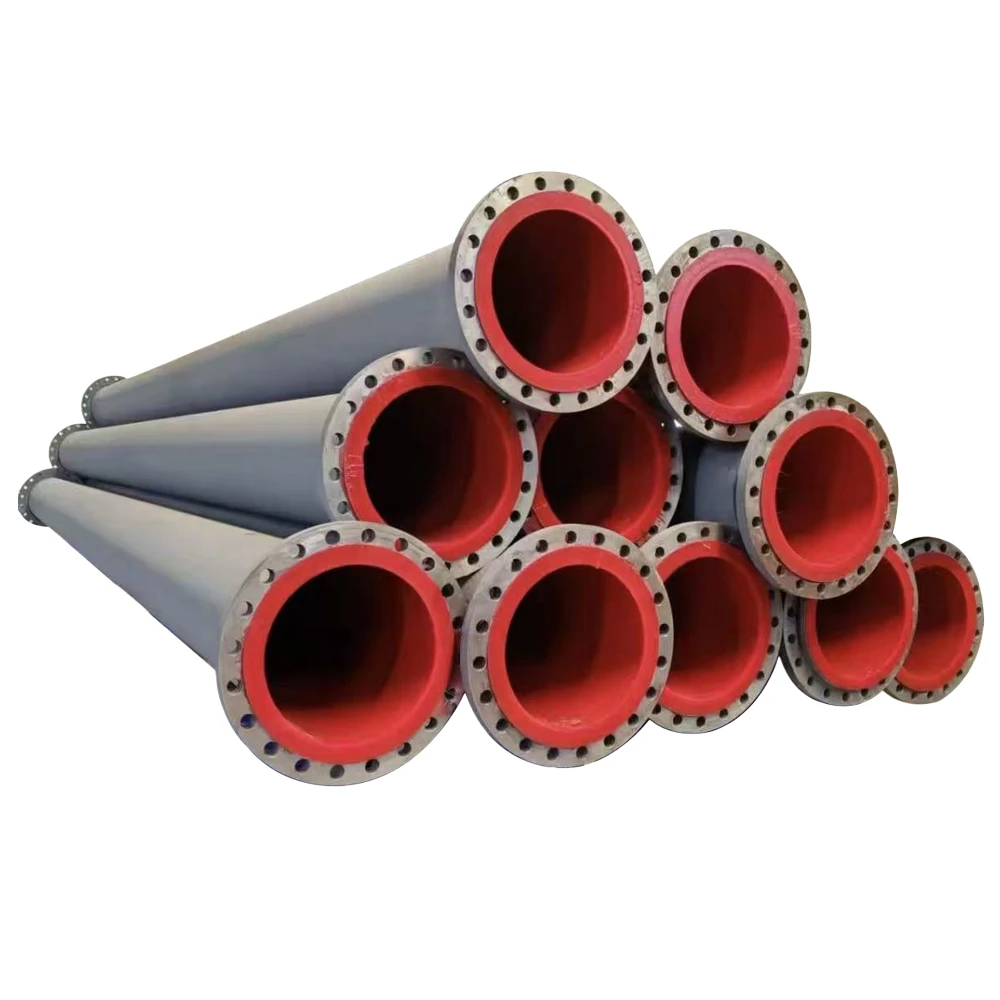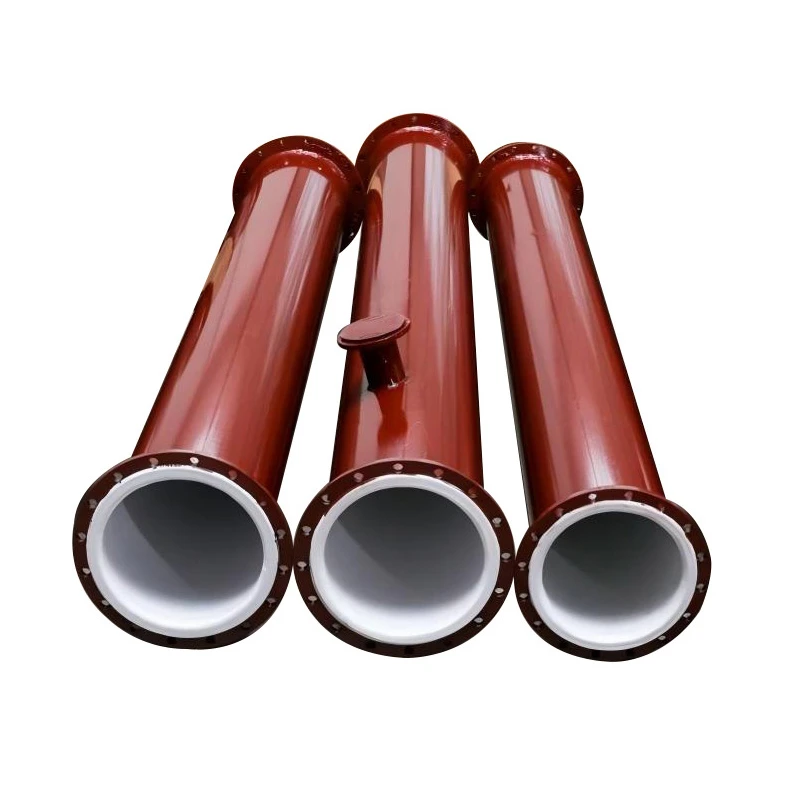

Polyurethane (PU) lined piping represents a critical engineering solution for industrial fluid transport where extreme abrasion and chemical corrosion would otherwise destroy standard carbon steel. By integrating a resilient elastomer inner layer with a high-strength outer shell, these systems extend the operational lifespan of infrastructure in mining, oil, and chemical processing. This article examines the technical parameters required for a custom pu lined pipe design to ensure maximum efficiency and durability.
In heavy-duty industrial environments, the primary challenge is the "wear-out" effect caused by high-velocity slurries or corrosive chemicals. Standard metal pipes suffer from rapid wall thinning, leading to costly unplanned shutdowns. The implementation of polyurethane linings provides a sacrificial and elastic barrier that absorbs the kinetic energy of particles and prevents the chemical degradation of the steel substrate, effectively solving the conflict between structural rigidity and surface resilience.
Readers will discover the essential criteria for selecting PU formulations, the importance of bonding technology, and how to evaluate supplier capabilities. We will analyze how specific technical variables—such as lining thickness and pressure ratings—directly impact the total cost of ownership and system reliability in demanding industrial applications.
Engineering Foundations of Polyurethane Lining
The fundamental principle behind polyurethane lining is the creation of a composite structure that leverages the best properties of two disparate materials. The outer shell, typically composed of carbon steel (such as Q235B or ASTM A106), provides the necessary hoop strength to withstand internal working pressures and external mechanical stresses. Meanwhile, the internal polyurethane layer serves as the functional interface. Unlike brittle ceramic linings, PU is an elastomer, meaning it can deform slightly under impact and then return to its original shape, which is why it is exceptionally effective at handling large solid particles in a slurry. From a technical perspective, the effectiveness of the lining depends on the shore hardness of the PU and the quality of the bond between the elastomer and the metal. A failure in bonding leads to "delamination," where the lining peels away, allowing corrosive media to reach the steel and cause rapid localized pitting. Therefore, the engineering focus is not just on the material itself, but on the interface chemistry and the manufacturing process used to secure the lining to the pipe wall.
Optimizing Industrial Piping for Abrasion and Corrosion
Achieving a high-performance piping system requires a systematic approach to design, where each variable is tuned to the specific chemical and physical properties of the transported medium. The following analysis breaks down the critical dimensions of technical optimization.
Material Selection Criteria
Not all polyurethane is the same. The choice between natural rubber, EPDM, or specialized PU depends on the medium's pH and temperature. For maximum abrasion resistance in mining slurries, high-molecular-weight PU is preferred. For chemical transport, synthetic formulations are required to prevent swelling or degradation. Buyers must match the elastomer's chemical compatibility with the specific acids or alkalis in their process.
| Lining Material | Primary Strength | Ideal Application | Limitation |
|---|---|---|---|
| Natural Rubber (NR) | Extreme Abrasion Resistance | Tailings/Ore Slurry | Low Oil Resistance |
| EPDM | Heat & Weather Resistance | Water Treatment | Poor Oil Resistance |
| Nitrile (NBR) | Oil & Fuel Resistance | Petrochemicals | Moderate Abrasion |
| High-Grade PU | Tear & Wear Resistance | Mining/Dredging | Temperature Limits |
| Butyl Rubber | Gas Impermeability | Chemical Processing | Lower Tear Strength |
| Neoprene | General Purpose/Mid-range | Marine Environments | Average Wear Life |
Bonding Mechanisms and Vulcanization
The integrity of the system relies on the bond strength. Advanced manufacturing utilizes hot or cold vulcanization processes to ensure a chemical bond rather than a simple mechanical fit. Hebei Qiao Wan Metal Products Co., Ltd. employs rigorous quality control during this phase to prevent vacuum collapse or delamination under high-pressure surges, ensuring the lining remains secure throughout its operational life.
Wall Thickness Optimization
Lining thickness is a trade-off between durability and internal diameter. Typically ranging from 3mm to 15mm, the thickness must be optimized based on particle size and flow velocity. A lining that is too thin will wear through quickly, while one that is too thick may reduce flow capacity or introduce internal stresses during the curing process.
Pressure Rating and Structural Support
While the PU lining handles the wear, the steel substrate handles the pressure. Systems are typically rated at PN10, PN16, or PN25. For high-pressure applications, the steel wall thickness must be calculated to ensure that the internal pressure does not cause the lining to deform or separate from the wall, particularly in vacuum conditions.
Flow Dynamics and Turbulence Control
Bends and elbows are the most vulnerable points in any pipeline. The internal smooth surface of a PU lining minimizes flow resistance and prevents mineral scaling. By reducing turbulence at the bends, the system lowers the kinetic energy impact on the pipe walls, which significantly extends the interval between maintenance cycles.
Application in Harsh Environments
These pipes are essential in dredging (sand and sea mud), power generation (ash handling), and mining (tailings discharge). In these scenarios, the "hard-shell, soft-core" design prevents the pipe from being "sandblasted" from the inside, maintaining a consistent flow rate and preventing leaks that could lead to environmental contamination.
Lifecycle and Maintenance Planning
A professional design focuses on the Total Cost of Ownership (TCO). By investing in higher-grade PU and precise bonding, operators reduce the frequency of pipe replacements. Monitoring wear rates through periodic inspections allows for planned maintenance rather than emergency repairs, which is critical for 24/7 industrial operations.
FAQ
What is the primary advantage of PU lining over standard steel pipes?
The primary advantage is the combination of abrasion resistance and corrosion protection. While steel provides structural strength, the PU lining acts as an elastic barrier that absorbs the impact of abrasive particles and blocks corrosive chemicals from reaching the metal, drastically increasing the pipe's service life in slurry and acid applications.
How do I choose the correct lining thickness for my application?
Selection depends on the particle size of the medium and the flow velocity. For fine slurries at moderate speeds, 3-6mm may suffice. For coarse ores or high-velocity dredging, 10-15mm is recommended. A technical consultation with engineers is advised to balance wear life against the required internal flow diameter.
Can PU lined pipes handle high-temperature fluids?
Polyurethane generally operates within a temperature range of -40°C to +100°C. For applications exceeding these limits, alternative linings like EPDM or specialized synthetic rubbers may be required. It is critical to verify the thermal stability of the PU formulation to avoid softening or degradation of the liner.
What causes delamination in lined piping systems?
Delamination occurs when the bond between the PU and the steel fails. This is usually caused by poor surface preparation of the steel, incorrect vulcanization temperature, or extreme pressure surges that create a vacuum effect. High-quality manufacturers use rigorous bonding tests to ensure the lining remains attached under all operating conditions.
How should I evaluate a supplier for custom lining solutions?
Buyers should check the supplier's engineering capacity, specifically their ability to provide design optimization and technical consultations. Evaluate their quality control process for bonding and their experience in the specific industry (e.g., mining vs. chemical). A supplier with a dedicated team of engineers and technicians, like Hebei Qiao Wan, can better tailor the lining to the specific medium.
Are these pipes suitable for vacuum conditions?
Yes, provided they are manufactured with high-strength bonding technology. In a vacuum, the external atmospheric pressure pushes the lining against the steel wall; however, if the bond is weak, the lining can collapse inward. Professional vulcanization ensures the lining resists these forces without buckling.
References and further reading
- Industrial Piping Standards for Abrasive Slurries - Material Engineering Guide
- Polyurethane Elastomer Properties and Chemical Compatibility Matrix
- Guidelines for Vulcanization Processes in Metal-Rubber Bonding