
Selecting the correct custom pu lined pipe diameter is a critical engineering decision for industries transporting abrasive slurries and corrosive fluids. Polyurethane (PU) lining provides a sacrificial wear layer that protects the structural steel outer shell from premature failure. This article examines the technical relationship between lining thickness, bore size, and the resulting operational efficiency of the pipeline system.
In heavy industrial environments such as mining, oil and gas, and chemical processing, the internal diameter directly influences flow velocity and pressure drop. A mismatch in specification can lead to excessive turbulence or sediment buildup, significantly increasing maintenance costs. Understanding how to balance the internal lining dimensions with the external structural requirements is essential for maximizing the service life of the asset.
Readers will explore the technical criteria for determining the optimal bore size, the trade-offs between different lining materials, and the manufacturing capabilities required to produce high-precision customized pipes. By analyzing material properties and application-specific needs, procurement managers can ensure they receive a solution that meets international durability standards while optimizing fluid dynamics.
Polyurethane Lining Fundamentals in Industrial Piping
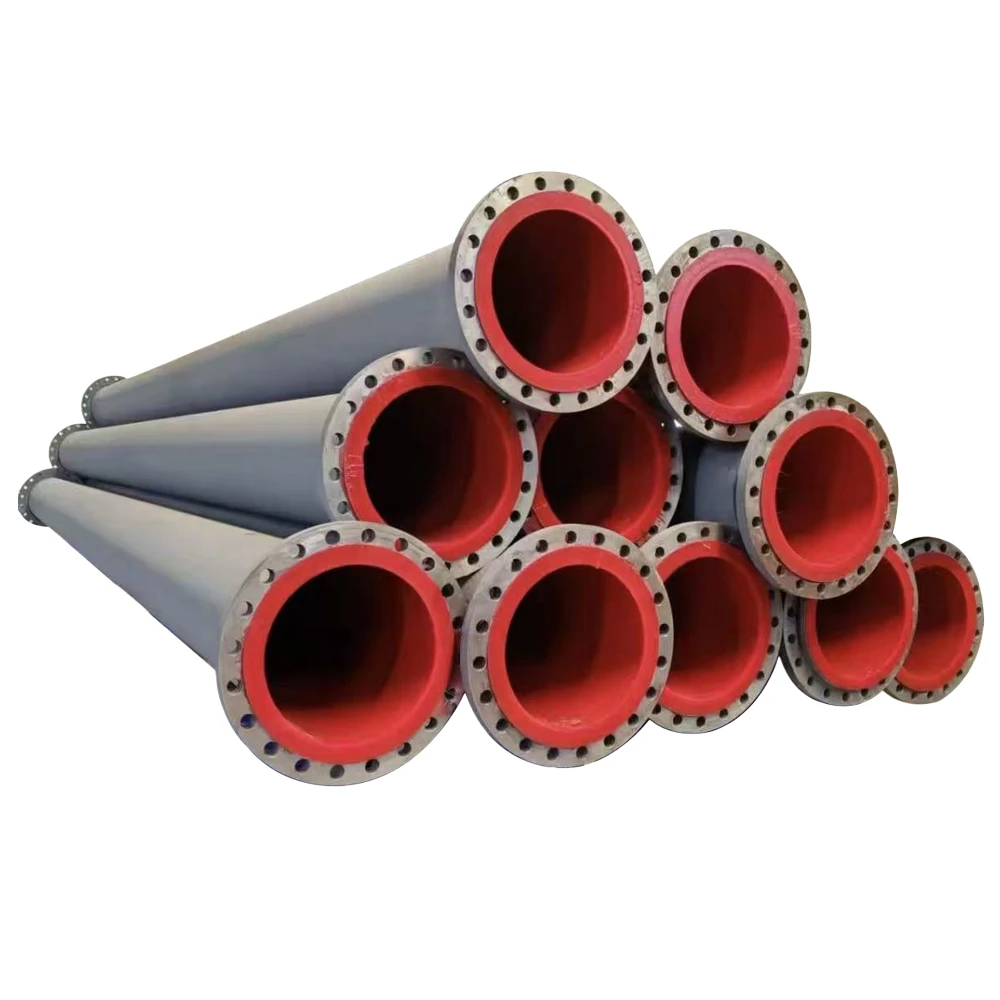
Polyurethane is selected for industrial piping primarily due to its exceptional abrasion resistance and elasticity. Unlike rigid metals, PU can absorb the impact of large particles within a slurry, preventing the "chipping" or "pitting" often seen in steel pipes. The lining acts as a barrier, separating the aggressive internal media from the carbon steel or stainless steel outer shell. This composite structure allows the pipe to combine the mechanical strength of steel with the chemical and wear resistance of polymers. In practice, the lining process involves precisely casting or extruding the PU material onto the inner wall of the steel pipe, ensuring a tight mechanical bond. The effectiveness of this system depends on the precision of the internal dimensions, as any irregularity in the bore can lead to localized wear patterns, known as "turbulent erosion," which rapidly degrades the lining in high-velocity zones.
Technical Guide to Sizing and Customization
Customizing a lined pipeline requires a holistic approach that integrates fluid dynamics with material science. The following analysis breaks down the seven key dimensions of the specification process to ensure operational reliability.
Defining Inner Diameter Requirements
The inner diameter (ID) determines the volumetric flow rate and the velocity of the transported media. For abrasive slurries, the velocity must be kept above the "critical settling velocity" to prevent particles from depositing on the bottom of the pipe, but below the "erosion threshold" to prevent excessive wear. Engineers must account for the PU lining thickness when selecting the outer shell size to maintain the target ID.
| Design Factor | Impact on Diameter | Risk of Incorrect Sizing | Evaluation Metric |
|---|---|---|---|
| Flow Velocity | Determines target ID | Sedimentation or Erosion | m/s |
| Lining Thickness | Reduces effective ID | Structural Weakness | mm |
| Media Density | Influences wall pressure | Pipe Burst/Collapse | kg/m³ |
| Tolerance Level | Affects joint fit | Leakage at Flanges | ± mm |
| Operating Temp | Causes thermal expansion | Lining Delamination | °C |
| Particle Size | Affects minimum bore | System Blockage | microns |
Polyurethane vs. PTFE Lining Logic
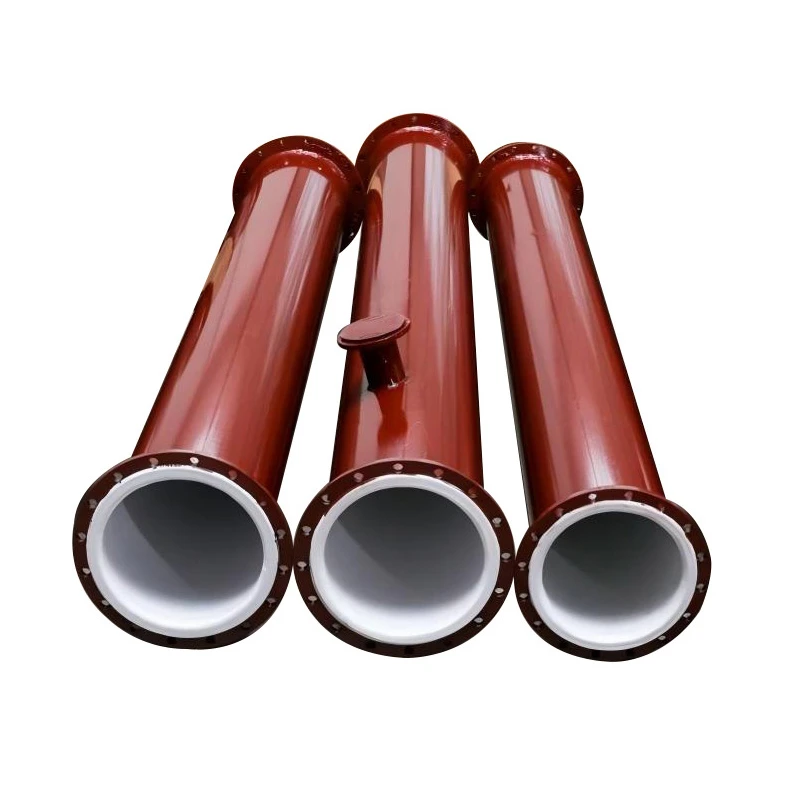
While PU is the gold standard for abrasion and impact, PTFE (Polytetrafluoroethylene) is preferred for extreme chemical inertness. PTFE lined pipes, such as those produced by Hebei Qiao Wan, are ideal for strong acids and alkalis where PU might degrade. The selection depends on whether the primary threat is physical wear (PU) or chemical corrosion (PTFE). PTFE offers a wider temperature range (up to +200°C) and lower friction, whereas PU provides superior mechanical toughness.
Wall Thickness and Pressure Ratings
The total wall thickness is the sum of the steel shell and the PU lining. Heavier steel shells are required for high-pressure applications, while thicker PU layers are utilized in high-wear environments. It is essential to calculate the pressure rating based on the steel shell's capacity, as the lining provides chemical protection but contributes negligible structural strength to the burst pressure of the system.
Customization for Abrasive Media
Customization extends beyond simple diameter adjustments. Depending on the hardness of the media (e.g., quartz, iron ore), the shore hardness of the polyurethane can be adjusted. A softer PU may be better for large impact particles, while a harder PU is more resistant to fine-particle sliding abrasion. Hebei Qiao Wan leverages technical expertise to optimize these material properties based on client-specific slurry data.
Steel Shell Material Integration
The choice of the outer pipe body—carbon steel or stainless steel (SS304, SS316L)—depends on the external environment. For underground installations or marine environments, stainless steel prevents external corrosion. The internal bonding process must be carefully controlled to ensure that the PU adheres uniformly to the steel surface, preventing gaps where corrosive fluids could migrate and attack the shell from the inside.
Installation and Connection Interfaces
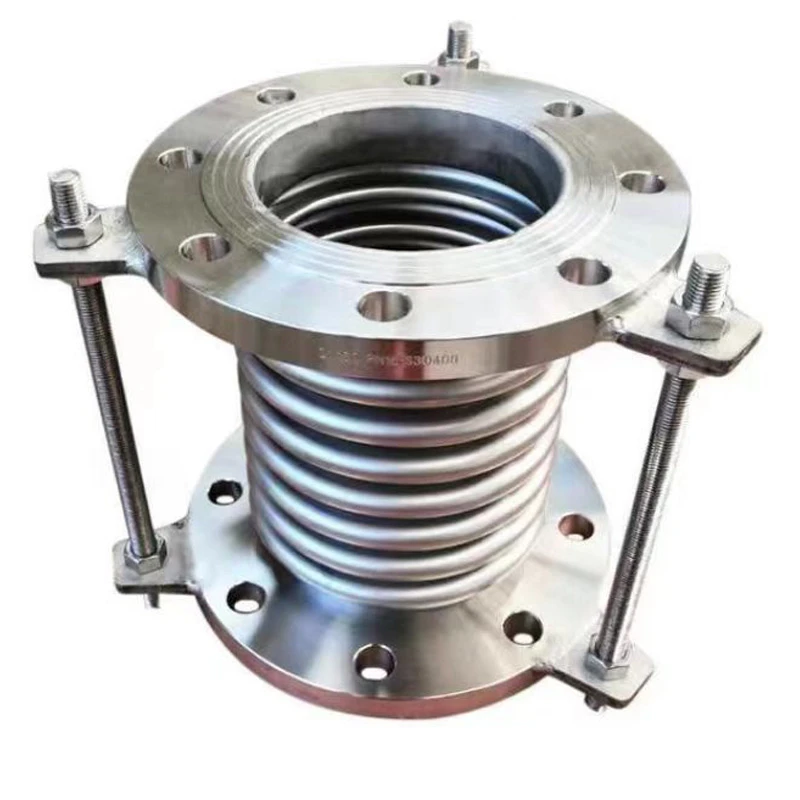
Lined pipes require specialized connection methods to ensure the lining is continuous. Common options include fixed flanges or loose flanges. For customized diameters, precision machining of the flange face is required to ensure a leak-proof seal. Improper installation can lead to "edge wear" at the joints, which is the most common point of failure in lined pipeline systems.
Lifecycle Wear Analysis
Monitoring the degradation of the lining is key to predictive maintenance. By calculating the wear rate (mm per 1000 hours of operation), operators can predict when the lining will reach its limit. The ability to provide customized diameters and thicknesses allows for the strategic placement of "extra-thick" sections in high-turbulence areas like elbows and T-junctions to extend the overall lifecycle.
FAQ
How do I determine the correct inner diameter for a PU lined pipe?
The inner diameter should be calculated based on the required flow rate and the critical settling velocity of the transported slurry. You must ensure the velocity is high enough to keep solids suspended but low enough to minimize abrasive wear. Once the target ID is established, the manufacturer will select a steel outer shell that accommodates both the ID and the necessary PU lining thickness.
Can polyurethane linings handle high-pressure industrial applications?
The pressure resistance is provided by the external steel shell, not the polyurethane lining. As long as the steel pipe body is rated for the intended working pressure (e.g., 2.5 MPa or higher), the PU lining will function effectively as a protective wear layer. The lining's primary role is to protect the steel from corrosion and abrasion, while the steel handles the mechanical load.
What is the difference between PU and PTFE lined pipes in terms of application?
PU (Polyurethane) is designed for high-impact and high-abrasion environments, such as mining slurries. PTFE (Polytetrafluoroethylene) is designed for extreme chemical resistance, handling aggressive acids and alkalis. If your priority is wear resistance and toughness, PU is the correct choice; if your priority is chemical inertness and high-temperature stability, PTFE is superior.
How does lining thickness affect the pipe's performance?
Thicker linings provide a longer service life by offering more sacrificial material to wear away before the steel shell is exposed. However, increasing the lining thickness reduces the effective internal diameter, which can increase flow velocity and pressure drop. Engineering a balance between wear life and hydraulic efficiency is critical during the customization process.
What are the common causes of lining failure in these pipes?
The most common causes include delamination due to poor bonding between the PU and the steel, "edge wear" at the joints caused by improper installation, and chemical degradation if the media is incompatible with the specific grade of polyurethane used. Regular inspection and choosing a manufacturer with rigorous quality control, like Hebei Qiao Wan, can mitigate these risks.
Does Hebei Qiao Wan provide customized diameter solutions?
Yes, Hebei Qiao Wan specializes in both standardized and customized solutions. They employ a team of senior engineers and technicians to help clients determine the optimal specifications—including diameter, lining thickness, and material grade—to meet specific international quality standards and operational requirements for their unique industrial environments.
References and further reading
- Industrial Piping Standards for Abrasive Media Transport.
- Comparative Analysis of Elastomeric Linings in Mining Applications.
- Fluid Dynamics and Critical Settling Velocity in Slurry Pipelines.