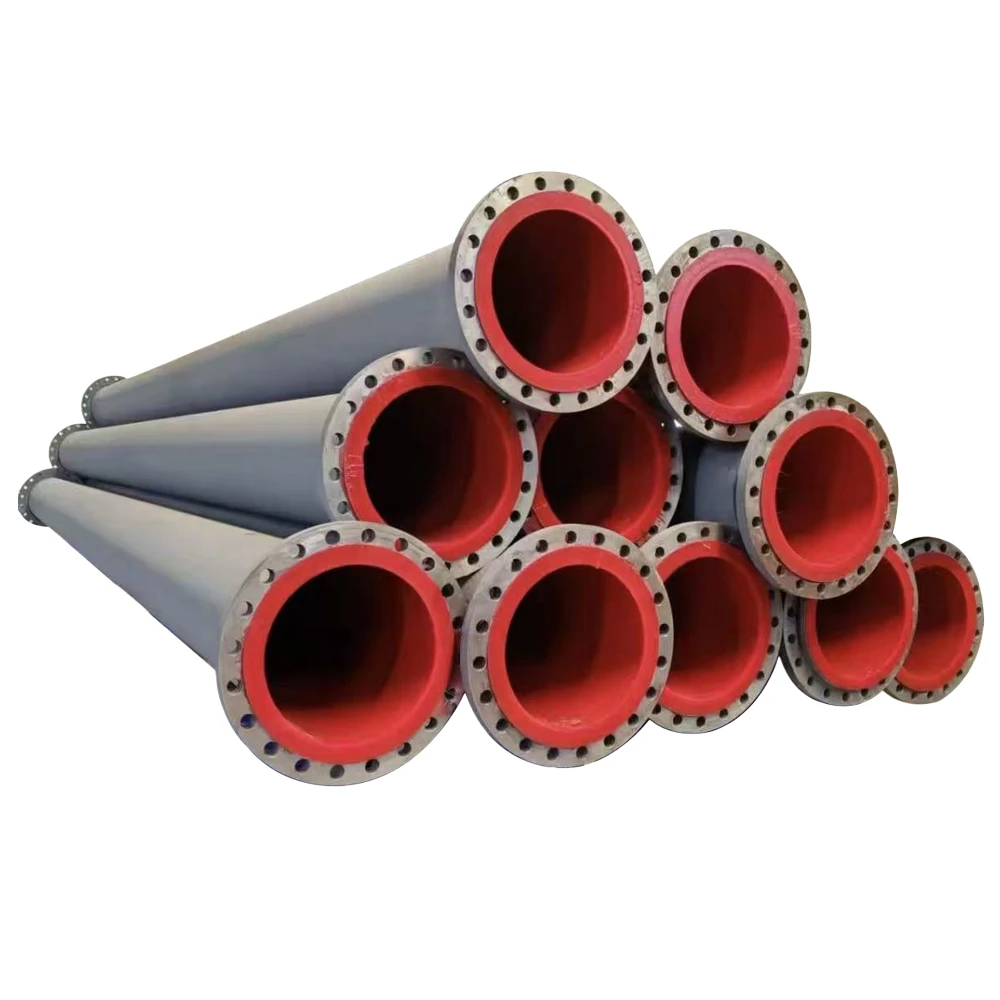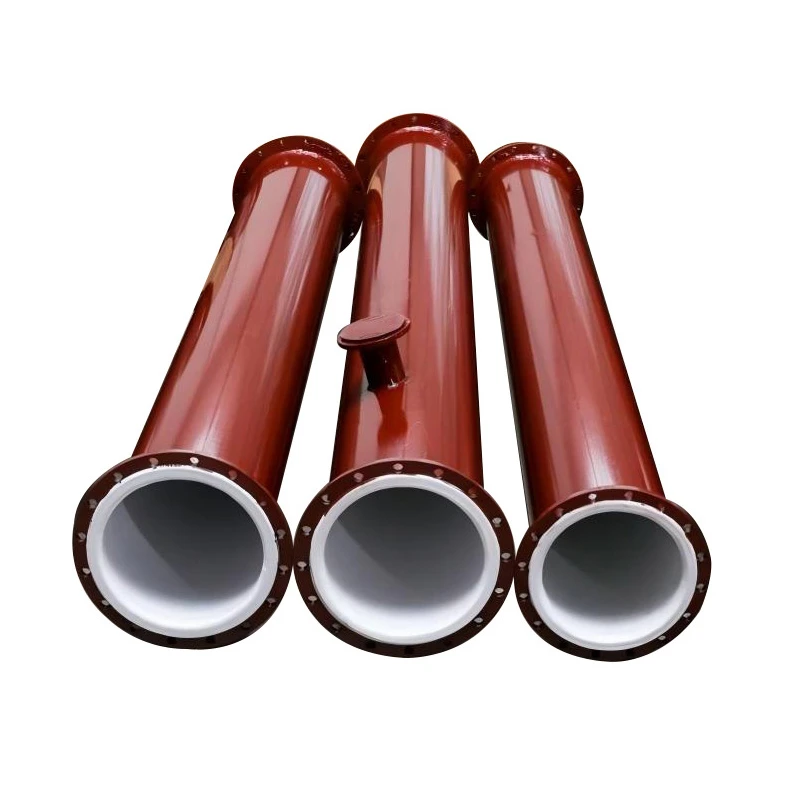

Selecting the correct custom pu lined pipe spools size is a critical engineering decision for industries handling abrasive slurries or corrosive fluids. Polyurethane (PU) lining provides a flexible yet exceptionally hard internal barrier that protects the structural steel outer shell from premature wear. This guide examines the technical parameters and selection criteria necessary to optimize pipeline longevity in harsh industrial environments.
In B2B procurement, a mismatch in spool dimensions or lining thickness can lead to catastrophic flow turbulence, increased pressure drops, and accelerated erosion at joint interfaces. Whether applied in mining, chemical processing, or water management, the integration of PU lining must be balanced with the mechanical strength of the carbon steel pipe to ensure operational safety under high-pressure conditions.
Readers will explore the relationship between internal diameter, lining thickness, and material hardness, alongside a framework for evaluating supplier capabilities. By understanding the trade-offs between standardized sizes and bespoke engineering, project managers can reduce maintenance downtime and lower the total cost of ownership for their conveying systems.
Technical Foundations of PU Lined Piping
Polyurethane-lined steel pipes are composite structures engineered to leverage the compressive strength of steel and the elastomeric resilience of polyurethane. Unlike rigid ceramic linings, PU is capable of absorbing the impact of large particulates, making it superior for slurry transport where particles may strike the pipe wall at varying angles. The bonding process is essential; a seamless chemical or thermal bond ensures that the lining does not collapse or delaminate under vacuum conditions or extreme temperature fluctuations. From a material science perspective, the hardness (measured in Shore A or D) determines the wear rate, while the molecular weight of the PU affects its resistance to specific chemical agents. In heavy-duty industries, this combination prevents the "pitting" common in uncoated steel pipes, thereby maintaining a consistent flow coefficient over thousands of operational hours.
Engineering and Sizing Guide for PU Spools
Defining the specifications for a PU lined spool requires a holistic view of the system's hydraulic requirements and the physical constraints of the installation site. The following analysis breaks down the seven core dimensions of spool engineering.
Determining Spool Dimensions
The primary consideration is the internal diameter (ID), which dictates flow velocity and pressure drop. When specifying a spool, engineers must account for the lining thickness, as this reduces the effective bore of the steel pipe. For instance, a standard steel pipe size will have a smaller internal clearance once the PU layer is applied. Accurate measurements are vital to ensure that the spools align perfectly with existing valves and flanges during assembly.
| Parameter | Impact on Performance | Critical Check | Risk of Incorrect Size |
|---|---|---|---|
| Internal Diameter | Flow Capacity | Velocity Limits | Excessive Turbulence |
| Lining Thickness | Wear Life | Bond Strength | Delamination |
| Outer Diameter | Structural Support | Clamp Fit | Mechanical Instability |
| Flange Face | Leak Prevention | Gasket Compatibility | Fluid Leakage |
| Wall Thickness | Pressure Rating | Material Grade | Burst Failure |
| Spool Length | System Layout | Thermal Expansion | Installation Misalignment |
Material Synergy: Steel and Polyurethane
The effectiveness of a lined spool depends on the compatibility between the carbon steel shell and the PU liner. Carbon steel provides the necessary rigidity to withstand external soil loads or internal hydraulic surges. Meanwhile, the PU layer acts as a sacrificial barrier. Hebei Qiao Wan utilizes a rigorous selection process for materials to ensure that the polyurethane maintains its elasticity and hardness, preventing the brittle fractures that can occur in lower-grade polymers when exposed to industrial stress.
Abrasion Resistance Mechanisms
PU linings excel in "sliding abrasion" and "impingement abrasion" scenarios. The polymer's ability to deform slightly under impact allows it to absorb energy and "bounce" particles back into the flow stream, rather than allowing them to carve into the pipe wall. This mechanism significantly extends the service life compared to uncoated piping, particularly in mining applications where ore slurry is highly abrasive.
Corrosion Protection Standards
Chemical inertness is a hallmark of high-quality polyurethane. By sealing the steel from the internal medium, the lining prevents oxidation and acid-driven corrosion. This is essential in chemical processing plants where the conveyed fluids would otherwise eat through carbon steel in a matter of months. The lining must be inspected for pinholes or gaps, as any breach can lead to localized "under-lining" corrosion, which is difficult to detect until failure occurs.
Pressure Rating and Wall Thickness
The pressure capacity of a lined spool is primarily determined by the steel outer pipe's wall thickness and grade. However, the lining thickness must be optimized; too thin, and it wears through quickly; too thick, and it may reduce the flow efficiency or introduce installation challenges. Engineering calculations must ensure that the combined structure can handle the maximum operating pressure (MOP) and potential pressure spikes during pump start-ups.
Customization for Industrial Fit
Standardized pipe lengths often fail to meet the precise needs of complex industrial layouts. Custom spools allow for the integration of specific angles, offsets, and flange types. Hebei Qiao Wan provides customized solutions that involve precise design optimization, ensuring that each spool fits into the system with minimal field modification, which reduces labor costs and installation errors.
Lifecycle Maintenance Factors
Monitoring the wear state of the PU lining is key to preventing unplanned shutdowns. Ultrasonic testing or periodic visual inspections at access points are recommended. The lifecycle value of a lined spool is realized through the reduction of replacement frequency. By selecting the correct hardness and thickness initially, operators can move from reactive "fail-and-fix" maintenance to a predictive schedule based on known wear rates.
FAQ
What is the main advantage of PU lining over ceramic lining for spools?
The primary advantage is impact resilience. While ceramics are harder and offer superior resistance to fine-particle abrasion, they are brittle and can crack under heavy impact. Polyurethane is elastomeric, meaning it can absorb the energy of larger particles without fracturing, making it more suitable for coarse slurry and high-impact environments.
How does lining thickness affect the flow rate in a pipe spool?
Increasing the lining thickness reduces the internal diameter (ID) of the pipe. Since the flow rate is proportional to the square of the radius, even a small increase in lining thickness can lead to a noticeable increase in flow velocity and a higher pressure drop across the system. Engineers must balance wear protection with hydraulic efficiency.
Can PU lined spools handle high-temperature fluids?
Polyurethane has temperature limitations compared to steel or ceramics. Most industrial PU linings are effective up to approximately 80°C to 100°C. Beyond this range, the polymer may begin to soften or degrade, potentially leading to lining failure. For high-temperature slurry, ceramic or specialized alloy linings are typically preferred.
What should I check when evaluating a PU pipe spool supplier?
Buyers should evaluate the supplier's ability to provide technical consultations and design optimization. Check for quality control measures regarding the bonding process between the PU and steel, as this is the most common point of failure. Additionally, verify their capacity to produce custom sizes and their history of supplying to similar industrial applications.
How are PU lined spools typically joined in a piping system?
They are most commonly joined using flanged connections. The flanges are welded to the steel outer pipe, and the PU lining is finished flush with the flange face. This allows for easy assembly and disassembly using gaskets. In some specialized cases, coupling systems are used, but flanges remain the industry standard for B2B industrial spools.
What causes delamination in polyurethane lined pipes?
Delamination usually occurs due to poor surface preparation of the steel pipe before lining, inadequate curing of the polyurethane, or extreme thermal cycling that causes the steel and PU to expand and contract at significantly different rates. High-quality manufacturing processes, such as those used by Hebei Qiao Wan, minimize these risks through rigorous bonding protocols.
References and further reading
- Industrial Polymer Engineering Handbook: Section on Elastomeric Linings.
- ISO Standards for Industrial Piping and Composite Materials.
- Slurry Transport Guidelines for Mining and Mineral Processing.