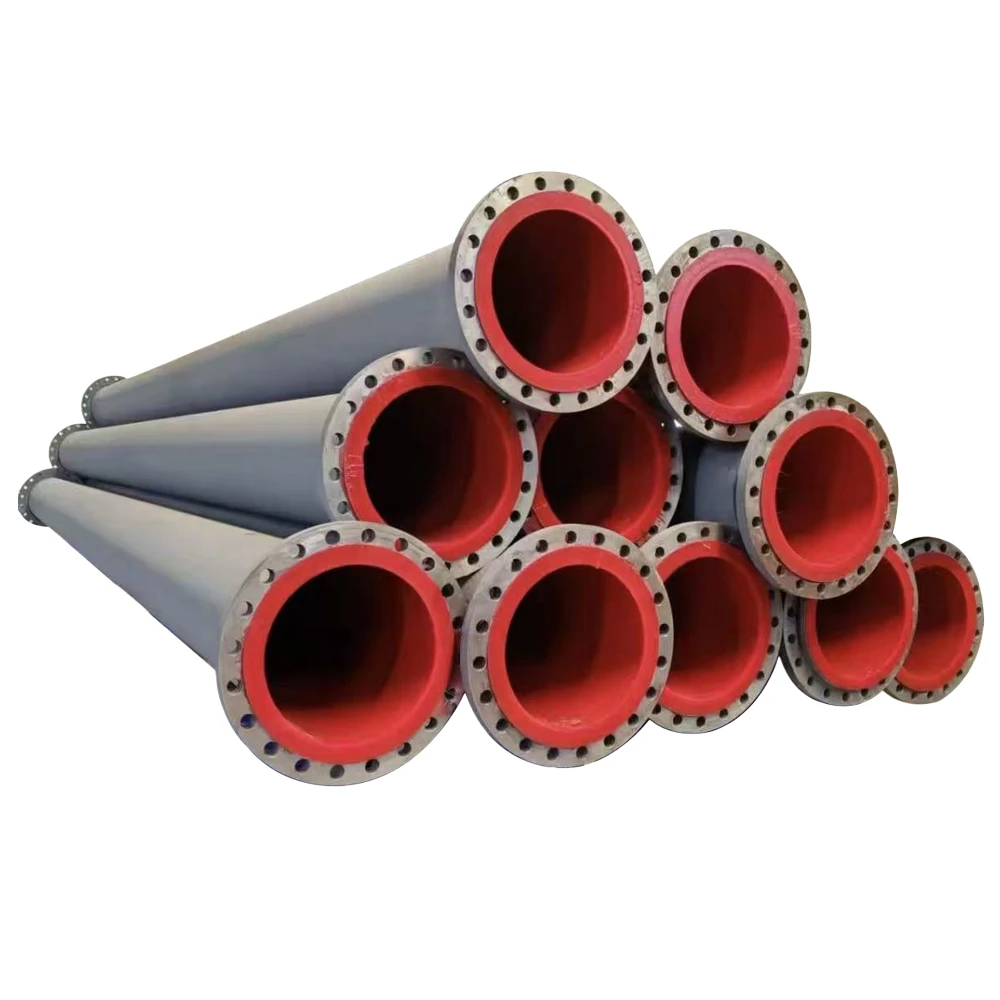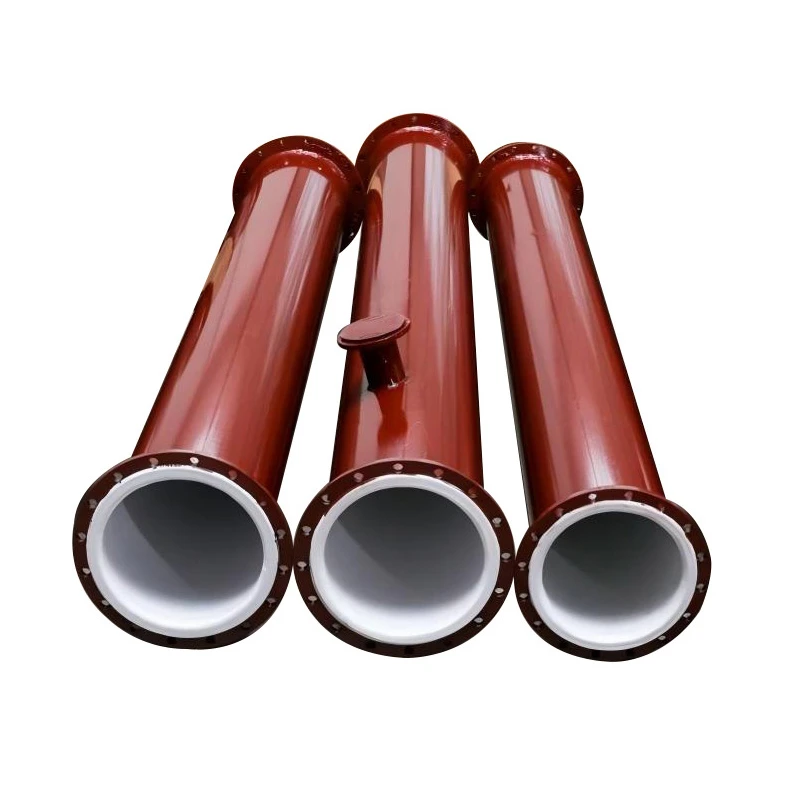

In industrial conveying systems, the transition points of a pipeline are the most susceptible to accelerated wear. A custom pu lined elbow angle serves as a critical engineered component designed to redirect material flow while shielding the structural steel from the erosive forces of abrasive slurries and particulates. By integrating high-performance polyurethane (PU) with a rigid metal exterior, these components ensure operational continuity in environments where standard piping would fail prematurely.
The primary challenge in abrasive conveying is the high-velocity impact of particles against the inner wall of the pipe, particularly at the bend. This phenomenon, known as impingement erosion, requires a lining material that possesses both hardness to resist scratching and elasticity to absorb the energy of the impacting particles. Polyurethane is uniquely suited for this task, offering a superior balance of wear resistance and flexibility compared to traditional rubber or uncoated steel.
This guide examines the technical requirements for selecting custom-lined elbows, the relationship between lining thickness and service life, and the engineering considerations necessary for successful integration into mining, chemical, and water management systems. Readers will gain a framework for evaluating supplier capabilities and determining the optimal specifications for their specific industrial application.
Engineering PU-Lined Components for Abrasion Control
The fundamental objective of lining a pipe elbow is to decouple the mechanical strength of the system from its wear resistance. While carbon steel provides the necessary pressure-bearing capacity and structural integrity to withstand external loads and internal pressures, it lacks the surface properties required to resist long-term abrasion from minerals or chemicals. Polyurethane linings act as a sacrificial yet highly durable barrier. Unlike ceramic linings, which are extremely hard but brittle, PU is an elastomer that can deform slightly under impact, effectively "bouncing" particles away and reducing the localized stress on the material surface.
From an engineering perspective, the effectiveness of a PU-lined elbow is determined by the bond quality between the elastomer and the steel substrate. Poor adhesion leads to "delamination," where the lining peels away under the force of the flowing medium, creating turbulence and accelerating the wear of the exposed steel. Professional manufacturing involves rigorous surface preparation of the steel and controlled curing processes to ensure a permanent, leak-proof seal. This integration is essential for maintaining the hydraulic efficiency of the system and preventing catastrophic pipeline bursts in high-pressure environments.
Technical Selection and Implementation Guide
Selecting the correct specifications for a lined elbow requires a detailed analysis of the fluid dynamics, the chemical nature of the transported medium, and the physical properties of the abrasive particles. The following subsections detail the critical technical dimensions that influence the performance and longevity of the component.
Polyurethane Lining Mechanisms
The protective capacity of PU is derived from its molecular structure, which allows it to resist both abrasion and many corrosive agents. The thickness of the lining is a primary driver of the component's lifespan; thicker linings provide a greater wear margin but may slightly reduce the internal diameter (ID), affecting flow rates. Engineers must balance the need for longevity with the requirements of the system's hydraulic capacity.
| Lining Thickness | Wear Resistance | Flow Impact | Typical Application |
|---|---|---|---|
| 5mm - 8mm | Moderate | Minimal | Low-abrasion fluids |
| 10mm - 15mm | High | Moderate | General industrial slurry |
| 20mm+ | Extreme | Significant | Severe mining tailings |
| Custom Tapered | Optimized | Balanced | High-velocity bends |
| Reinforced PU | Maximum | Moderate | Large diameter pipes |
| Hardness 90A+ | Very High | None | High-pressure particulate |
Elbow Geometry and Flow Dynamics
The angle of the elbow (typically 45° or 90°) significantly impacts the wear pattern. Sharp bends create higher turbulence and more direct impact on the outer radius. To mitigate this, customized radii can be employed to smooth the transition. A larger bend radius reduces the velocity of the impacting particles, thereby extending the life of the lining. The internal surface must be perfectly smooth to minimize friction and prevent the accumulation of materials, which could lead to blockages.
Steel Substrate Integration
The outer shell is typically constructed from carbon steel or stainless steel, depending on the external environment. For highly corrosive exterior settings, SS304 or SS316L is preferred. The steel must be precisely formed to the required angle before the lining is applied to ensure that the PU is not stretched or stressed during the bending process, which would create weak points in the elastomer's structure.
Customization Parameters
True customization involves more than just size; it encompasses the selection of PU hardness (measured in Shore A) and the specific formulation of the elastomer. For example, some applications require oil-resistant PU, while others need high-temperature stability. Hebei Qiao Wan Metal Products Co., Ltd. leverages its engineering team to optimize these parameters, ensuring that the lining's chemical composition matches the transported medium's properties.
Material Compatibility Analysis
While polyurethane is versatile, it can be degraded by certain strong acids or specific organic solvents. It is crucial to verify the chemical compatibility of the PU grade with the media. For extremely aggressive chemical environments, the polyurethane may be blended with other polymers or replaced by high-alumina ceramic linings if the temperature exceeds the operational limits of elastomers (typically above 80-100°C).
Installation Best Practices
Correct alignment during installation is paramount. Any misalignment that forces the pipe into a stressed position can cause the internal lining to crack or separate from the steel wall. Flanged connections are recommended for custom elbows to allow for easier replacement and more precise positioning. Ensuring that the gaskets are compatible with the PU lining prevents chemical leakage at the joints.
Lifecycle and Wear Monitoring
To avoid unplanned downtime, operators should implement a wear-monitoring schedule. Ultrasonic testing can be used to measure the remaining thickness of the PU lining without dismantling the system. By tracking the rate of wear, maintenance teams can predict the replacement interval and order custom components in advance, ensuring that the structural steel is never exposed to the abrasive flow.
FAQ
What is the main advantage of PU lining over rubber lining for elbows?
Polyurethane offers significantly higher abrasion resistance and tear strength compared to natural or synthetic rubber. It is more capable of resisting the "cutting" action of sharp mineral particles and generally provides a longer service life in high-velocity slurry applications, reducing the frequency of component replacements.
Can these lined elbows handle high-pressure industrial systems?
Yes, because the pressure-bearing capacity is provided by the outer steel shell, not the lining. The PU lining serves as the wear and corrosion barrier, while the carbon or stainless steel pipe ensures the structural integrity required for high-pressure operation, typically up to 2.5 MPa or higher depending on the steel wall thickness.
How do I determine the required lining thickness for my application?
Thickness selection depends on the particle size, concentration of solids, and flow velocity. For low-concentration slurries, 8-10mm may suffice. For heavy mining tailings with high abrasive indices, 15-20mm is recommended. Consulting with an engineer to analyze the expected wear rate per year is the most reliable method.
What happens if the PU lining is punctured or wears through?
Once the lining is breached, the abrasive medium directly attacks the steel substrate. Because steel is much softer than the PU lining in terms of abrasion, the pipe wall will wear through rapidly, leading to leaks or a full pipe rupture. This is why regular thickness monitoring is essential for industrial safety.
Are custom angles available beyond standard 45 and 90 degrees?
Yes, specialized manufacturing allows for any required angle to be produced. Custom angles are often necessary for retrofitting existing plants where space is limited or for optimizing the flow path to reduce turbulence and energy loss in the conveying system.
How should I evaluate a supplier for custom lined piping?
Evaluate the supplier based on their technical engineering support, their ability to provide different PU hardness grades, and their quality control processes for bonding. A reliable supplier, such as Hebei Qiao Wan, will offer design optimization and technical consultations to ensure the component matches the actual operational stresses of your site.
References and further reading
- Industrial Piping Standards for Abrasive Slurry Transport - Engineering Handbook.
- Polyurethane Elastomer Properties and Application in Heavy Industry - Technical Review.
- Guidelines for the Maintenance of Lined Pipeline Systems in Mining Operations.